Showing posts with label Starsat. Show all posts

Development Alert: Crunchyroll To Get A Dedicated TV Channel In North America With Global Plans On The Cards, Could MultiChoice Or StarTimes Perhaps Get It?

Also Read

Since 2006, Crunchyroll has been known as the leading destination for anime fans featuring shows such as My Hero Academia, Demon Slayer, Attack On Titan and One Piece. Since it's inception in 2006, it garnered 120 million subscribers globally with 1% of the population under a paywall.

For a decade, the Sony based brand was available only as a streaming service with a freemium tier available to low income households with select shows licenced to broadcasters in Africa such as Toonami and SABC 2.

Through the greenhouse website, it was revealed that the company is looking for a director/manager in charge of managing the upcoming linear service to the current Crunchyroll streaming service alongside the programming and operations for the brands.

For now, the channel will rollout in North America (likely Latin America) and through a statement it was also mentioned that the Crunchyroll Channel will rollout "in key markets around the world" so we assume they'll be targeting regions which already bundle the streaming service.

South Africa is the most notable within the African region to bundle Crunchyroll alongside various other streaming services such as The Walt Disney Company's Disney+, BBC and ITV Studios' BritBox and Vuclip's VIU. As other territories have yet to see these in their markets.

With a majority of gaming and anime fans residing within South Africa and selected African territories, there's no doubt that Crunchyroll Channel would be a resounding success but questions amounts to whether or if StarTimes and/or MultiChoice will look into adding the channel.

Crunchyroll catering for the same audience as Adult Swim and not Cartoon Network isn't regarded as a kids channel so if anything these channel will likely set alongside brands like Universal, M-Net and BBC Brit on DStv or FilmBox Africa, FilmBox Action and St Zone on StarSat.

The Walt Disney Company To Close 11 Channels In Taiwan, Could Africa Follow Perhaps?

Also Read


In 2021, The Walt Disney Company unveiled plans to close 100 international channels so there was a lot of fear for the Disney Channels in Africa following the closure of Disney XD and FOX but MultiChoice managed to secure rights for these brands through 2024.

Fast forward to 2023, The Walt Disney Company had confirmed the closure of more channels with consumers in Taiwan set to lose out on a number of brands including National Geographic, National Geographic Wild, Baby TV, Star Entertainment and Star World.

Disney+ launched in 2019 and has since then become a top priority for the blue brand. Not much investment is going onto Disney Channel or National Geographic as the brands being used to promote the bulk of content seen on the streaming service.

Following the demise of these channels in Taiwan, there's now a lot of fear for these channels in Africa and I know MultiChoice had managed to carry Disney Channel, Disney Junior, National Geographic and National Geographic Wild through 2024.

But for all we know these channels could go dark by the 31st December 2023 at 23:59 which rounds up to 2024 as seen in Taiwan. It had been speculated that most of The Walt Disney Company"s linear offering won't leave past 2025 in European territories.

Disney XD was terminated in Africa alongside the United Kingdom's Disney Channels in 2020 followed by FOX which saw the brand exit Germany, Asia and Africa by 2021. Now there's rumours swirling that the brand would be closing channels across Africa by early 2024.

What Happened To Trace Sport Stars?

Also Read

Trace Sports Stars is a lifestyle channel that celebrated the life of sports through factual entertainment, reality shows and gossip similar to E! operated by NBCUniversal. The channel supplies various originals such as Up Close, Bad Boys In Sports and Football Stars.

The channel was added in 2011/2 on Sky UK and MultiChoice's DStv across Africa as Trace Sports. Two years later, it went dark in the UK which coincides with the rebrand to Trace Sports Stars as they didn't offer live sports and the name didn't coincide with the offering.

When looking at a brand name like Trace Sports, one would assume they'd play actual sports like English Premier League, La Liga and WWE and although the content is focused solely on that topic. It just didn't really stick with some consumers.

In general, Trace Sports Stars was a wreck not because the channel couldn't get fresh content as it did possess potential but likely due to the fact that this type of content promoted by the channel isn't watched by vast majority as seen with the actual sporting events.

That in mind is what led to it's demise on MultiChoice's DStv with Trace Africa coming in place and at that time it was made available on rivals On Digital Media and StarTimes' StarSat and eMedia Investments' Openview platform.

This was Openview's first attempt at anything sports with StarSat offering a platform to reject channels or affordable entertainment. But of course, both brands ended scrapping the channel before 2018 for similar reasons as MultiChoice - viewership.

As of 2023, Trace Sports Stars is not viewable anywhere in Africa but that doesn't mean the channel is completely lost as it can be obtained on Binge Networks (USA), Sky (Mexico), Viaccess-Orca (France) and NTV Plus (Russia).

To be frank, Trace Sports Stars remains sustainable if anything it's not performing as well as it's musical family Trace Urban, Trace Gospel, Trace Toca, Trace Mziki and Trace Naija all of which are viewable on MultiChoice's DStv in selected territories.

News Shorts: The Splat Is Back! As Nickelodeon Debuts Fresh New Look, Glow TV Issues Out Statement Following Its Termination On Openview And StarSat, And An Eye For An Eye Becomes The Next Pick To Make Its Linear Debut On e.tv

Also Read

Introducing news shorts basically a revamped version to the current Roundups but instead of shortening info we look at getting content that doesn't need too much detail but of course we can't guarantee how often this will be a thing as the content in question match the whole scenario.

Bring on the slime

As advised, Nickelodeon is pairing this year’s fun-filled slime-fest, the Nickelodeon Kids' Choice Awards 2023, with the debut of an all-new brand refresh of its on-air look and feel!

The rebrand reimagines Nickelodeon's iconic splat logo and slime with a fresh new design, and includes new on-air graphics, such as lower-thirds, updated BUG/DOG, bumpers, idents, promo endboards and a new "Nickelodeon Productions" endboard.

This marks Nickelodeon's first brand refresh in six years.

The demise of Glow TV

Notice to all our loyal viewers. Take note that we are currently facing various challenges, including the high level of loadshedding throughout the country, which is impacting negatively on our viewership. One of our options for now, is for GlowTV to be on the OTT platform (streaming), so that programs can be watched even on your phones. Unfortunately, due to our contracts expiring we will be off air on some of the platforms, effective from March 1. Please keep in touch with us for the latest updates via our social media platforms: Facebook, Instagram, Twitter and YouTube. We thank you for your support over the years. - GlowTV team.

More eVOD coming soon to e.tv

From having almost everything, a happy and successful life, The Hero protagonist in the film Caesar loses this overnight and is forced on the run with nothing and leaving everything behind. He returns and fights to reclaim everything he lost. Joining him on the escapades is his love Lucy, their son Zack and the antagonist known as The Don.

Debuted in 2022 on eVOD, the film airs next Sunday at 20:00 from 12 March with exclusive film from the streamer Surviving Gaza airing later in the same timeslot.

Warner Bros. Discovery Remains With The Most Popular Kids Channels In The African Market Including Boing, But Where Does That Leave Toonami Exactly?

Also Read

During the week, Warner Bros. Discovery held a showcase where they were able to clear up some fears consumers had of Cartoon Network shutting down as seen with the Disney Channels and the current offering of Boomerang once it becomes Cartoonito in March.

Cartoon Network ranks as the most popular kids destination in South Africa for a 7th year in a row pulling at least 15 million households which is ginormous for any channel in general with Boomerang (soon to be Cartoonito) coming in second place with 10 million.

Some of these popular shows include Regular Show, We Baby Bears, Craig Of The Creek, Teen Titans GO!, Grizzy And The Lemmings, Masha And The Bear, Scooby-Doo and Looney Tunes.

Insidus Games:
Transformers
Pink Panther: Pinkadelic Pursuit
Looney Tunes
The Powerpuff Girls: Mojo Jojo A-Go-Go!

Currently available in selected parts of Africa, Boing was apparently part of this event and to my surprise it's actually managing to get some attention. Not much had been shared in terms of performance but viewers are digging classics like Johnny Bravo and Clarence.

Of course, one brand that Warner Bros. Discovery failed to mention amidst all of this is Toonami.

Since 2021, Toonami is no longer regarded as kids entertainment which was the whole point of this virtual event. But the brand features a ton of kid centric programming and films from the likes of Batman, Superman, Justice League and Teen Titans.

It still repetitive compared to most channels seen under Warner Bros. Discovery that it wouldn't be shocking if they scrapped the channel. Cartoon Network has been airing a variety of content from the DC Universe and Toonami's offering would help compliment that section.

Regular Nick:
- Wonder Pets revival might be in the works for Nickelodeon
- Peacock greenlights two new animated series
Boomerang to go dark on the DStv platform next month
Disney Junior and Disney+ to debut new Star Wars series in May

As opposed to the future of Toonami, it might as well be Boing which incorporates all aspects of kids and family in terms of animation including the DC Universe. Besides, both are very much underrated and the one Boing gained popularity after nearly a decade.

Roundups #135: Genius Brands Rolls Out A Music Division, A Rebroadcast Of Die Put Makes Way To e.tv's Line-up And Chaos Reigns At BBC News Ahead Of Merger With BBC World News

Also Read

Kartoon Channel becomes a music division

Genius Music, which launched this month, already has a library of more than 8,000 tracks stemming from its own original brands and also from IPs it has inherited through recent acquisitions of companies including WOW! Unlimited Media and Your Family Entertainment.

According to a release, Genius Music plans to distribute and license these assets on streaming channels and music platforms. One of its first projects will be to develop and monetize original music for animated series Shaq’s Garage (co-produced with Ireland’s Telegael), which is slated to premiere on GB’s Kartoon Channel!

Former Saban Brands music supervisor Juan Carlos Quintero will oversee the division and serve as an executive music producer, with an eye towards making new content that spans a variety of genres. Quintero brings more than 20 years of experience as a music producer/composer with him to Genius Music, having managed production music libraries for companies including Warner Chappell, Café Moondo, Megatrax and 5 Alarm Music. And during an eight-year stint at Saban Brands, he worked on kids brands such as Power Rangers, Digimon and Popples.

Regular Nick:
- Operation Ouch returns for a new season on Da Vinci Kids
- Several Cartoonito domains have been registered
February on Disney Channel and Junior
New Bear Grylls series is coming soon to Da Vinci Kids

More drugs and violence is coming to e.tv

Directed by Sinan Öztürk, it is an acclaimed series with four seasons completed. Die Put is set in the dangerous Istanbul neighbourhood Çukur and revolves around a ruling mafia family and a prodigal son who needs to return home to save his family. Of course, there is also a beautiful girl and some romance in addition to the drama, danger and family secrets.

Viewers can expect a gripping first season of Die Put, with the Koçova family (a family that is often closely related to crime) that rules the neighbourhood of Çukur. The Koçovas have their own set of rules and one of these is that drugs cannot be produced, used or sold in Çukur.

In the series, the newcomer, Vartolu is determined to break the ban and after his initial attempts to negotiate with the Koçova family is rejected, he attacks the family and the neighbourhood. But, just as he thinks he has broken the Koçova family and brought them to their knees, something unexpected happens.

Openview Plus:
- eExtra scrapped the launch of 4 telenovelas
Verdeelde Liefde to return with a second season on eExtra
Imbewu has been cancelled on e.tv after 5 seasons
A look at former NBC soap, Passions

More cuts awaiting the new version of BBC World News

In three months’ time, BBC World News and BBC News Channel are due to complete their merger to create a single service for audiences in the UK and around the world. But, according to BBC sources speaking to The Sunday Times, the service could end up with “the softest launch, so as to be indiscernible”.

Under the BBC’s proposals, the new TV news service would offer opt-outs for viewers in the UK, carrying simulcasts of news programmes on BBC One and BBC Two. Outside of these simulcasts, the BBC is due to retain a back-up facility allowing the channel to breakout of the international schedule to show UK-specific breaking news.

The report cites sources within the BBC who say bosses are not able to say how this break-out stream will work. Staff fear the service will be under-resourced. On the new service, presenters will be expected to manually work the autocue.

Genius Brands Expands International Market Launches For Kartoon Channel! Worldwide

Also Read

Continuing to build the global footprint of Kartoon Channel! Worldwide, Genius Brands International, Inc. has signed a deal with China’s StarTimes to launch the rapidly growing Kartoon Channel! on January 31st on DTH satellite and digital terrestrial in South Africa and in 46 countries throughout the Sub-Saharan African region.

The brand new 24/7 Kartoon Channel!, dedicated to Africa, will be available to all StarTimes customers in the basic tier on DTH satellite and digital terrestrial: channel 304 on satellite and channel 357 on DTT (276 in Uganda). Kartoon Channel! Africa will offer exclusive and first run series that have proven popular with kids and families, including Genius Brands’ originals “Stan Lee’s Superhero Kindergarten,” starring Arnold Schwarzenegger, “Rainbow Rangers,” “Thomas Edison’s Secret Lab,” and “Llama Llama,” starring Jennifer Garner and based on the bestselling children’s book franchise. The channel will also feature family-friendly movies on the weekends such as “Stan Lee’s Mighty 7,” “Ella Bella Bingo,” “Toys and Pets,” and “Boonie Bears.”

Insidus Games:
Powerpuff Girls Snowboarding
Baby Felix Halloween
Looney Tunes Monster Match
Thor: The Dark World

Additionally, Kartoon Channel! Africa will internationally premier the recently announced new 10-episode elimination-style competition reality series and accompanying Roblox Game Experiences for children, Kidaverse Roblox* Rumble. Hosted by TV personality and former NFL star, Rashad Jennings, the series will air as part of a games-branded programming block on weekday afternoons.

“We continue to build the global presence of Kartoon Channel! by creating unique partnerships, and we are delighted and honored to work with StarTimes to bring Kartoon Channel! to African kids and families in 2023. Our family-friendly brand values and safe environment deliver the perfect recipe to entertain and inform kids via characters and shows they adore. We are just getting started in growing Kartoon Channel! as a preeminent children’s entertainment destination worldwide,” stated President of Kartoon Channel! Worldwide Paul Robinson.

“We are thrilled to launch a channel throughout Africa that offers such a diverse line-up of programming for children 2 – 12-years-old and their families.  With safe, value-driven content across multiple genres, we anticipate Kartoon Channel! to be a hit across the region, and look forward to working with Genius Brands in the coming years to bring a unique entertainment experience to our young audiences across the region,” said General Manager of StarTimes Media Lily Meng.

Kartoon Channel! is currently available in key territories around the world, including Australia and New Zealand (Samsung TV Plus), Germany (Waipu), and the Philippines (Tapp Digital). Kartoon Channel! branded blocks are also currently available in 65 countries across the Middle East, Africa, and Latin America.

Regular Nick:
Could Universal Kids be the next channel to close down from NBCUniversal?
Here are other ways to view PBS Kids
The Twisted Timeline Of Sammy And Raj coming soon to Nickelodeon
Predictions: Nicktoons and Boomerang's untimely demise

Speech: Leading The UK Into Digital By The Director-General Of The BBC, Tim Davie, At The Royal Television Society

Also Read

Good morning. Today, 100 years and 23 days after the first BBC broadcast, I want to talk about choices. Choices for us all.

Choices that have profound consequences for our society; its economic success, its cultural life, its democratic health. Our UK and its essence. Of what we hand to the next generation. Of growth.

Choices that concern not just the role of the BBC, but something bigger. About whether we want to leave a legacy of a thriving, world leading UK media market or accept, on our watch, a slow decline. 

Are we simply going to drift to the point where the emergence of vast US and Chinese players marginalise us, while we put on a very British brave face as they do so? Resigned to the fact that our culture and creative economy will inevitably be shaped by polarised platforms and overseas content. Or are we proactively going to take the steps to ensure that we tell our own stories, and remain the envy of the world?

Today I want make a simple case.  A case for growth, and the choices, as the UK, to own it.   

Too much of this debate is painfully “small”. In BBC terms, we understandably fret about domestic issues, political spats and latest headlines. And, because people care, we keep busy on a joyous treadmill of flare-ups and debates.  

One of my favourite quotes of Lord Reith is “the BBC will never broadcast anything controversial, and has no plans to do so.” If only.

But beyond the day-to-day, we urgently need to spend more time agreeing what we want to create that best serves our audiences, the economy and society.

Today I want to set out some of the choices that we need to make, and make the case for ambition.  

This will require the BBC, regulators, politicians – all of us - to work together and make clear decisions. To invest capital and set policy, deliberately, not simply live on hope and good intent.  To create a bigger creative sector supported by strong public service media and a thriving BBC. 

In short, we have reached a defining decade for the future of this incredible sector and this wonderful country.   

But first, a quick look back. This year has shone a light on a venture, a 100 years old, that has delivered outstanding shareholder returns: the BBC.  It has not come about accidentally. It is a triumph of smart invention and intervention. An inspired choice by those early pioneers as they reflected on what really mattered in life after the scars of war. They decided, amazingly, that broadcasting was not simply about money, it was  more important than that.  

It has led to immense returns to the UK public: economic growth, societal growth, personal growth. Value for all.   

It’s easy to forget what a remarkable story of success it is. And how much of it we take as given. Of course, the BBC is not perfect, we make mistakes, we struggle, we commit acts of self-harm, and our funding mechanic, the Licence Fee, is positively described by some as the least worst option. But step back a bit from the noise and look at our legacy.

There’s the creative health of the nation.

Ever since those early days in 1922 when 2LO crackled into life, we have backed our culture, through an enlightened blend of smart public interventions, brilliant commercial companies, and inspirational individuals.

At the heart of that ecosystem is the BBC. 

Critically, our universal brief means we do not simply look to maximise global efficiency and monetise a core audience. We support creativity in every part of the UK and its Nations. Our work helps us understand each other and find communal stories that underpin our national life.

9 in 10 people say it’s important for our media to reflect the lives of different people in the UK to each other. 

Then there’s our creative industries, a world leading economic powerhouse. 

£109bn in annual GVA – that’s bigger than the life sciences, aerospace, automotive, oil and gas sectors combined.

If we get it right, we have the potential to more than double that by 2030 growing way ahead of the wider economy, and delivering jobs across the UK.

The BBC as a catalyst for growth is proven. 

We support over 50,000 jobs – more than half outside London. We work with 14,000 suppliers.  

In Salford, the number of creative businesses has grown by 70% since we moved there in 2010.  In Cardiff, the creative sector has grown by over 50% since we opened Roath Lock Studios in 2011. 

New analysis from PwC shows that increasing the BBC’s footprint in an area by just 15%, doubles the creative cluster growth rate.  By 2028, the BBC’s ‘Across the UK’ plans can create more than 4,500 new creative businesses outside London, along with 45,000 jobs. 

But the BBC’s legacy is also about our democracy.

We face a growing assault on truth and free reporting. Recent data on our watch is stark and shocking.

In February, Freedom House in the US found that 60 countries suffered democratic decline in 2021, while only 25 improved. 

Only around 20% of people now live in what are considered free countries – that’s halved in 10 years. Journalism is now completely or partly blocked in 73% of countries.

The social psychologist Jonathan Haidt argues there are three forces that bind successful democracies: social capital; strong institutions; and shared stories.  Not a bad list if you are in my job.

But he also believes that social media, while having many benefits, has weakened all three. It weakens political systems which are based on compromise and it fuels mob dynamics that restrict a constructive process of dissent and debate.

Our own research shows that’s happening here, too. Over 40% of people are now worried about sharing views with those who have a different view.

Research by the European Broadcasting Union shows that well-funded public service broadcasters goes hand-in-hand with democratic health. The greater their audience, the more citizens tend to trust each other.

That is why the UK’s strong global voice is so precious. 

Today the BBC reaches nearly half a billion people weekly, a number that has been growing. We are the best known British cultural export – quite something when you consider the competition, from music to monarchy.

In India, our services reach 70 million people in 9 local languages. In the US, the BBC is now the most trusted news brand.

When our Russia Editor, Steve Rosenberg, interviewed Foreign Minister Lavrov, a must watch by the way, it got over 7 million views inside Russia.

So I think that if Reith were sitting here today, apart from giving me that withering stare, I think he would be amazed by what we have created, together.  

These successes are the result of deliberate decision-making and difficult choices. 

There was the birth of TV in the 30s, and the reshaping of radio in the 60s – when we said goodbye to the Home Service, the Light Programme, and the Third Programme.

The launch of BBC Online in the 90s. The launch of iPlayer in 2007 – a moment that, in the words of Reed Hastings, “blazed the trail” for global streamers.

Alongside these BBC moves, we have acted successfully as an industry. Freeview, Freesat, digital TV switchover, DAB, Radioplayer, Youview, all successful in developing our media sector, fostering competition but also enhancing public service broadcasting.

All these moments required a choice, a will, an optimism, and a generosity of vision. A desire to see the big picture.  

There are cautionary tales too. The infamous blocking of Project Kangaroo back in 2009, when the UK PSBs wanted to set up a streaming service.  

But, overall, there is so much to be proud of in what we have created together.  

However, today, I believe we are in a period of real jeopardy. A life-threatening challenge to our local media, and the cultural and the social benefit they provide. This is not an immediate crisis for audiences.  The choice of high-quality TV and audio has never been better. The threat is not about if there is choice, it is about the scope of future choice and what factors shape it.  

Do we want a US-style media market or do we want to fight to grow something different based on our vision? 

I sometimes read that the BBC needs to clock that the world has changed. I can assure you that we do not need convincing.  

The internet has stripped away the historical distribution advantage of having half of the TV channels or FM frequencies. In this world relevance, like trust, has to be earned.  

Industry analysts predict that we have probably seen the last year in the UK when broadcasters make up the majority of video viewing. Five years ago broadcast TV reached nearly 80% of young adults a week. Today it’s around 50%, and radical changes are happening across all ages. Tik Tok is now bigger than the BBC in video for 16-24s in the UK.

So today is the right time to ask the question, are we happy to let the global market simply take its course or are we going to intervene to shape the UK market?

Now, before looking to the future, let me just give a quick update on how the BBC is doing. 

We have been working on transformation rather than just managing decline. Despite market changes and cuts, we have coped well by focusing entirely on providing value to all. Not simply saying we are a good thing but being used.  

Our Value For All strategy is clear: ensuring we are impartial, delivering must-watch UK content and developing a world-class online offer. Supported by ambitious commercial plans. 

Nearly 90% of adults, and 75% of 16-34s came to the BBC every week, and every month nearly every adult uses us in the UK. These reach numbers have held up well. Over 30 million browses in the UK used the BBC online yesterday, the only online UK brand to really mix it with global players.  

When it comes to hours of video watched in the UK, the BBC remains bigger than Netflix, Amazon Prime and Disney Plus, combined. 

Editorially we have wind in our sails.  Award-winning shows from Time to Motherland.  9 million watched the launch of Frozen Planet II, a peak audience of 17 million watching the Women’s Euros final, 42 million streams of Glastonbury.  And the coverage of the Queen’s funeral showed what only the BBC can do.

More recently, in its first seven days since launch, episode one of SAS Rogue Heroes had an audience of 6.5 million, compared with 3 million for episode one of the latest season of The Crown.  

We’ve grown BBC Sounds to over 1.5 billion listens. 

And, in the midst of culture war storms and Twitter rage, the numbers of people saying we offer impartial news has held firm.

Commercially, BBC Studios has grown rapidly in the last 5 years delivering a stretching target of over £1.2bn in returns and growing profits 70%.

We also drove the UK economy. Our Across the UK plans are well underway and mean we’re on target for £700m of additional spend outside London by 2027/28.  For example, we’ve announced £25m investment in the North East, a new Birmingham base in Digbeth, and we’ve moved news teams. We relocated 8 Radio 3 titles yesterday in Salford. And we continue to invest in unique and strong content in the Nations and Regions. 

At the same time we’ve stepped up our commitment to a highly efficient BBC, fit to deliver maximum possible value. We’ve reduced our overhead rate to within 5% of our total costs. We cut over 1,000 public service roles last year.  All our senior managers are assessed and we are stripping away bureaucracy as we create a world-class culture.

Overall our progress over the last 2 years has been good. In many ways, thanks to the exceptional talent in the BBC, it has been gravity defying. But looking to 2030, it is not enough.

So now let’s look to that future. Imagine a world that is internet only, where broadcast TV and radio are being switched off and choice is infinite. There’s still a lot of live linear viewing but it is all been delivered online. 

Far from decline, could we harness the possibilities of this interactive digital landscape to increase public value and stimulate the UK media market? What would it actually take to deliver that? 

I think there are four choices that we need to make to give us a real chance of achieving success for the UK. They need urgent action. Namely: 

- Should we, as the UK, own a move to an internet future with greater urgency?
- Should we transform the BBC faster to have a clear, market leading role in the digital age?
- Should we proactively invest in the BBC brand as a global leader? 
- Should  we move faster in regulating for future success? 

Of course the answer to these choices is yes. 

I don’t intend to answer every question in detail today but let me outline some thoughts.

Firstly, we must work together to ensure that everyone is connected, and can get their TV and radio via the internet. This isn’t something to resist. A fully connected UK has very significant benefits for society and our economy. It would unleash huge opportunities for innovation.

For the BBC, internet-only distribution is an opportunity to connect more deeply with our audiences and to provide them with better services and choice than broadcast allows. It provides a significant editorial opportunities. A switch off of broadcast will and should happen over time, and we should be active in planning for it. 

Of course, there’s a bad way it could happen. Where access to content is no longer universal. Or is unaffordable for too many. Where the gateway to content is owned by well capitalised overseas companies. 

So, we must close gaps and guarantee accessibility for all. Forecasts suggest that by 2030, about 2million homes will still not be using fixed-line broadband and even in a few years 5% of the UK landmass may not be covered by 5G or 4G to provide content on the move.  Now I know that there is a renewed effort to drive this coverage by Government and the DCMS; this is critical.

While the BBC cannot fund the build-out it can collaborate with others to make a move to online attractive to all, and play a big part in educating people about  the transition. We will become more active as part of a coalition to make this happen. 

Let’s all work to plan it flawlessly and leave no-one behind, and ensure that UK businesses and audiences get maximum benefit.

In this new world, the next choice we need make is to champion a clear, market leading role for the BBC. How will we inform, educate and entertain in 2030?

The answer must be to differentiate and not copy.  

The BBC will focus its effort on the following in the digital world:

- Nurturing an informed society through impartial, trusted news and information
- Inspiring and supporting people of all ages with trusted knowledge and training
- Engaging audiences with high-quality local British creativity from across the UK

Over time this will mean fewer linear broadcast services and a more tailored joined up online offer. As examples, we will double down on the latest work in News on disinformation, or accelerate the drive to ensure that Network drama is sourced from across the UK which differentiates us from others.

We believe that if we drive this transition successfully we can deliver universality despite a world of intense competition. We will achieve this not by creating derivative or niche content but ensuring maximum relevance of our core output.  To be clear, by universality we mean three things, which global players do not do. Namely:

- Access: making sure all audiences in the UK can get to the BBC
- Relevance: making content that aims to appeal to all UK audiences not just monetizable groups
- Engagement: reaching and being used by the vast majority of UK audiences

In the future we will need to transform the BBC faster to deliver a compelling online offer.

We are working on how an IP BBC could be the best version of the BBC shaped around people’s interests and needs. A daily partner to your life, bringing the BBC together in a single offer with personalised combinations.  A world in which local news, areas of interest and hidden gems can be found more easily.  

Digital offers a huge opportunity to unlock more audience value but it requires big organisational change: a radical overhaul of how we use data, a heavyweight world-class tech team, new operating models, new creative solutions and ideas. Imagine news re-imagined for the iPlayer or increased functionality when watching the game online. 

We will be world-leading pioneers in this. No-one in the world has created a digitally led public service media company of scale and the global opportunity for us is there for the taking. 

Within the BBC this means significant change. We will have fewer brands overall, and consolidate more activity behind a simple, single brand in the UK: the BBC. And you’ll see this globally as well. We will also simplify sub-brands such as BBC News. You can see a first step in our bringing together of the BBC News Channel and BBC World News as one brand: BBC News. 

We will share more plans in this area in the coming months. 

Inevitably all this requires another choice and that is to actively, dare I say happily, invest in the BBC. 

Any transition of a legacy, broadcast organisation to a digital future needs capital. As the owner of even the biggest companies are finding out, it is not for the faint hearted. Moving to digital is not the challenge in of itself, moving to digital while not losing most of your audience and burning millions of pounds unnecessarily is the challenge.   

In the BBC we are privileged to have the Licence Fee until 27/28 but if you take the period 2010 to 2028, we forecast that core funding for the BBC  has been cut by a whopping 30%. Now my key metric is providing great audience value for that fee. But others have been driving up pricing and driving up media costs reducing the BBC’s ability to deliver great value. As we look to the 2030s, we are open minded about future funding mechanics. But we are clear that it is critical that we need a universal solution that fuels UK public service growth not stifles it while offering  audiences outstanding value for money.

Of course, the latest settlement did include the increased debt facility for BBC Studios which was welcome, and we are ambitious about its prospects. Alongside commercial plans, we will keep cutting costs to invest and attract more partner investment as well such as the latest deal we announced with Disney on Doctor Who.  But under the most ambitious scenarios, this will not change the need for serious public service investment.

And in the short term we will need more money to support the World Service to avoid further cuts and we will be discussing this with the FCDO. The Russians and Chinese are investing hundreds of millions in state backed services. We have a choice to make.

We will of course complement this world service growth with ambitious plans for BBC Studios.

The BBC is one of the most powerful and well recognised brands on the planet and we should be backing it. It’s as simple as that.

Lastly, we need to regulate for success at speed.

This is not a new theme. It’s no secret to anyone here that our legal and regulatory environment has not kept pace with the market. 

The Digital Markets Act, Online Safety Bill, the Data and Digital Identity Bill, and the Media Bill planned for this Parliament are essential. We need rules for the prominence, availability and inclusion of PSB content in new platforms, in video and audio. Organisations providing content need the detailed data that will be the lifeblood of success in the new world.  

But it cannot be right that we have to wait years for legislation to recognise change in our sector.  

So we need a regulatory framework that is proactive. It must be agile – able to respond without endless consultation and process. I am pleased that Ofcom is working in this area.  

Part of this is allowing the commercial arm to thrive and a regime that is ex post, not ex ante, responding to obvious harm when it occurs, not defining every possible negative outcome in advance and restricting UK innovation as a result.

So, in summary, four choices for our future. 

Move to an internet future with greater urgency

- Transform the BBC faster to have a clear, market leading role in the digital age
- Proactively invest in the BBC brand as a global leader
- Move faster in regulating for future success urgently
- Shaping the online future of the UK to work for all of us. To lead not to follow.  To grow.

Thank you.

Former StarSat Channel Home To Inside The Factory And Air Warriors Is Closing Down In The UK

Also Read

The Smithsonian Channel is an international channel operated by Paramount Global which is home to factual shows such as Inside the Factory, How Did They Build That?, WWII Battles in Color, Air Warriors, Ocean Super Predators and many more.

The channel was available in Africa alongside Love Nature a while back on StarSat as a replacement to National Geographic and National Geographic Wild as the pay-tv platform got into a bit of a disagreement with their suppliers, The Walt Disney Company.

Prior to that, The Smithsonian Channel was also allocated on the East African platform Zuku TV but I prefer to credit StarSat since consumers are more familiar with the platform.

Anyways, The Smithsonian Channel what can I say I'm not too familiar with the brand and I only knew of existence when it was introduced by StarSat but what was more shocking was that it's owned by Paramount that are home to various popular brands most of which are on DStv.

But considering how they screwed over VH1 I'm the least bit shocked that they'd be another channel lurking around the same corner.

StarSat:
Delayed SABC channel launch on StarSat explained
Russia Today to launch South African hub
StarSat trying to be DStv friendly
BYUtv should be added onto StarSat
StarSat to offer more African dubbed telenovelas
Could StarSat be losing two more channels?

From what I can establish no actual reason was given for The Smithsonian Channel's exit in the African market my guess on StarSat has to do with costs as they've scrapped over 40 channels most of which weren't even replaced to date.

But considering the times both Love Nature and The Smithsonian Channel both left the platform it's possible that may not be the case as Zuku TV fell prey to similar circumstance.

During the week, officials announced the exit of The Smithsonian Channel in the UK with consumers having to rely on Paramount+ for more factual entertainment which has just got me thinking. Is it possible that the termination in Africa may have something to do with what's already seen in the UK?

I mean I kind of suggested that theory a while back that The Smithsonian Channel's demise had to do with streamlining efforts.

I've got nothing to say about The Smithsonian Channel except for the fact that a lot of viewers depend on the channel but I think part of the reason it got scrapped had to do with the rivalry with National Geographic and Discovery both of which offer similar entertainment.

The Walt Disney Company:
- The Good Doctor getting a female led spinoff
- King Kong Series in development
- The Walt Disney Company to extend the reach of Star Channel
- DStv Streama now offers Disney+
- List of scrapped spinoffs for The Simpsons
- Disney Television Animation unveils Kiff!

National Geographic is about to undergo a similar fate leaving Discovery and from what I've seen Curiosity and BBC Earth to cater for these audiences or at least in Africa.

Paramount+ besides carrying content from The Smithsonian Channel will also leverage from MTV, BET, Nickelodeon, CBS and many more. Although I have yet see them streamline their linear offering I had noticed that they've been closing irrelevant or non-performing channels.

The Smithsonian Channel was neither but I do feel it's presence on Paramount+ will help the brand gain more acknowledgement.

BYUtv Offers The Very Best In Kids And Family Entertainment, Could DStv, StarSat Or Openview Perhaps Get It?

Also Read

With family at its core, BYUtv - a non-commercial, value-based television network - brings inspiring and uplifting entertainment into million of homes across the nation through cable, their website or on the app. BYUtv has a place for everyone -- together.

BYUtv produces shows under several categories: BYU Sports, Campus, Documentary, Faith, Family, Lifestyle, People, and Performing Arts. This includes original series, documentaries and religious service programs, along with family and faith-based films from several major studios.

Some notable original series include Studio C, Random Acts, All-Round Champion, Relative Race and Wayne Brady's Comedy IQ.

StarTimes and On Digital Media once provided a religious channel Smile TV operated by Trinity Broadcasting Network. This channel would have made a suitable alternative had they considered replacing the channel the moment TBN opted not to supply it.

MultiChoice is set to lose a pair of channels in the near future - Disney Channel and Disney Junior. With that entail, an alternative will be needed in order to keep viewer's minds at ease. BYUtv can make up for the soon to be lost live-action slate on Disney Channel.

eMedia Investments once offered the Da Vinci educational channel on the Openview platform until it formed one of their never ending attempts to save money. BYUtv could make up for the lost factual content especially now that Openview+ is on the cards.

StarSat To Offer More Dubbed Entertainment In Various African Languages

Also Read

Satellite pay-TV provider StarSat has announced it is doubling down on dubbing foreign telenovelas into Zulu and other indigenous South African languages.

This comes after eMedia’s E-tv and Openview platforms saw success dubbing Turkish telenovelas into Afrikaans.

“Telenovelas continue dominating global television viewing, proving one of the most powerful entertainment genres in modern-day television and on-demand subscription viewing,” StarSat stated.

It said telenovelas are distinct from soap operas.

“Unlike soapies that go on seemingly forever, the running time of telenovelas averages around 120 episodes,” said StarSat.

“Whereas soapies can go on for decades, telenovelas usually run between six months and a year.”

Another key difference is that soap operas often appeal to women, whereas telenovelas are more family orientated, with some exceptions, StarSat said.

StarSat launched its Midrand dubbing studios in 2021 with the objective to adapt its best-performing telenovelas to Zulu and other indigenous South African languages.

“Our dubbing initiative continues to create many new jobs along the value chain,” said ODM CEO Debbie Wu.

On Digital Media (ODM) is the company that owned and operated TopTV. StarTimes bought it out of business rescue in 2013 and rebranded the service StarSat.

“Since the launch of our dubbing studios, we have recruited and trained numerous South African youth as voice actors, directors, translators, editors, and sound engineers,” Wu said.

Following the success of the Zulu-dubbed version Philippine novella “The Blood Sisters”, StarSat has launched a Zulu version of the popular Zee TV novella “Waaris: Indlalifa”.

A broad slate of Zulu dubbed telenovelas of Mexican, Korean, Spanish, and Indian origin are in the works for broadcast on StarSat’s flagship channel StarTimes RISE.

The pay-TV operator also has an app subscribers can use to watch its library of telenovelas.

StarSat also said it would broadcast English novellas, such as the Philippine show “La Vida Lena”, which will be on the ST Novella E Plus channel. It will also broadcast “My Left Side” — a Zee Novella.

Why Fan-Favourite Sports Channel Is Not Available On Pay Platforms

Also Read


In 2021, the isolated SABC Sport channel on the DTT platform was made available to Openview consumers as part of a deal made by the public broadcaster and eMedia Investments which included two more channels and 19 radio stations.

Years prior, SABC Sport made its OTT debut on Telkom's streaming service TelkomOne under a similar agreement with the public broadcaster within it included the 19 radio stations, SABC Education and likely any upcoming channel(s).

Since it's availability to free-to-air consumers, SABC Sport has become the top 10 watched channels on Openview and since then sourced several content outside of SABC 1-3 which includes the best of ESPN and Racing240 and all of that just triggered a certain pay-tv brand, SuperSport.

SuperSport is a sports division of M-Net which houses the biggest sports brands like Premier League, La Liga, UEFA Champions League, Moto GP, WWE, Wimbledon, PGA Tour. Point is they are the biggest sports brands in Africa.

Unfortunately, due to all these prestige over the brand only a handful of matches are accessible to lower masses and those excluded rely on the SABC for some of these matches.

In the beginning, consumers no matter the platform would have access to these matches but following the official launch of SABC Sport that all changed as SuperSport exclusive matches would only be screened on the DStv and DTT platform with TelkomOne and Openview blocked from seeing any of these matches.

If you look at the tactic here, they're basically trying to boost the consumer numbers on their platforms as they experience a decline in DStv Premium and Compact consumers and also with streaming taking over they want to level the playing field.

Since then the public broadcaster had filed an application accusing SuperSport of being anti-competitive in a similar stature to eMedia Investments when their channels where pulled from the DStv platform.

Taking that to account, why would MultiChoice want a channel that rebroadcast SuperSport content especially if it means more consumers will likely downgrade if it means paying less for premium content.

Some of the content that was restricted to TelkomOne and Openview were also excluded from SABC Sport imagine if the channel was already on DStv with those restrictions attached when consumers who missed out would hope to catch-up or rehash some past content.

Adani  Acquires  29%  Stake In NDTV

Also Read

Gautam Adani, Asia’s richest man, signalled serious intent for a play in India’s media and entertainment industry as his companies acquired a 29% stake in broadcaster NDTV Ltd and launched an open offer to acquire an additional 26% from shareholders, as mandated by law.

The acquisition capped months of speculation about a potential acquisition that saw the NDTV stock rally fivefold in nine months (from ₹75.55 on 1 December to ₹376.55 on Tuesday on BSE).

Adani Group companies acquired the stake in NDTV indirectly by buying Vishvapradhan Commercial Pvt. Ltd (VCPL), which owned convertible debentures (warrants that provide for the conversion of debt to equity) in RRPR Holding Pvt. Ltd that in turn owned 29.18% of NDTV Ltd. Vishvapradhan acquired the debentures in 2009-10 in return for a loan amounting to ₹404 crore it extended to the promoter holding company.

According to India’s securities law, an entity that acquires more than 25% of the equity in a publicly traded company must launch an open offer to acquire an additional 26% from public shareholders. Adani Group and Vishvapradhan on Tuesday announced an open offer at ₹294 per share (based on Sebi’s takeover guidelines), representing a 28% discount to NDTV’s ₹376 closing price on Tuesday.

The acquisition drew immediate protests from NDTV, which said in a filing to the exchanges on Tuesday evening that Adani group firms had acquired the stake without consulting its promoters.

“The NDTV founders and the company would like to make it clear that this exercise of rights by VCPL was executed without any input from, conversation with, or consent of the NDTV founders, who, like NDTV, have been made aware of this exercise of rights only today."

Adani’s acquisition of a stake in the high-profile broadcaster, although the subject of market speculation even before the Adani group formally announced its entry into media in March this year, dramatically came to light in exchange filings fired in quick succession on Tuesday evening. On Monday, NDTV told exchanges in response to a media query that its promoters were not engaged in any talks for a stake sale. On Tuesday evening, Adani Enterprises first announced its wholly owned subsidiary Adani Media Networks acquired Vishvapradhan from Eminent Networks and Nextwave Televentures—entities linked to entrepreneur Mahendra Nahata.

Then came the announcement that VCPL had exercised the convertible warrants and now owned 99.5% of RRPR Holdings and, in turn, 29.18% of the equity stake in NDTV. Alongside, Vishvapradhan and the Adani companies announced the open offer triggered by the acquisition.

“This acquisition is a significant milestone in the journey of AMNL’s goal to pave the path of new age media across platforms," Sanjay Pugalia, chief executive officer, AMG Media Networks Ltd, said in a statement.

NDTV founders Prannoy and Radhika Roy control 32.2% of shares in NDTV, while the public shareholders own 38.55%. The company posted revenues of ₹421 crore and a net profit of ₹85 crore in the year ended March 2022.

The 2009-10 transaction between Vishvapradhan and RRPR Holdings was subject to regulatory ire as the Securities and Exchanges Board of India (Sebi) held in a 2019 order that the loan agreement between the two entities amounted to a transferring of beneficial interest in NDTV and should have triggered an open offer by Vishvapradhan then. The regulator castigated the NDTV promoters in strong terms, saying they perpetrated fraud on minority investors by entering into this kind of arrangement. The order was subsequently set aside by the Securities Appellate Tribunal (SAT), which held that just because no interest was charged on loan, it didn’t mean an indirect acquisition as there was no transfer of management control.

In May, Adani Media Networks acquired a 49% equity stake in Quintillion Media, founded by media entrepreneur Raghav Bahl.

Russia's RT Channel To Launch South African Hub

Also Read

Russia's RT channel has embarked on expansion plans in Africa, starting to set up headquarters on the continent in South Africa where the Kremlin-funded TV channel is carried and supported by China.

Paula Slier, the South African TV reporter who previously worked for SABC News and who was posted in Jerusalem, Israel, as RT's correspondent for that region, is now overseeing the set-up of RT's African headquarters in South Africa and will be managing the bureau.

On Monday an RT spokesperson told News24 ; "We are indeed currently focused on developing our English-language Africa hub in South Africa, headed up by Paula Slier – a South Africa native, RT's longtime correspondent and formerly head of RT's Jerusalem bureau".

"We will be releasing more updates about the particulars of this operation at the appropriate time," RT said.


According to an insider, the RT South African newsroom is currently being set up although it's still unclear how many South African staff, camera operators and reporters RT plans to hire as it takes a page from the playbook of what other global TV news channels like CNN International, Al Jazeera, BBC World News and China's pro-Beijing CGTN have done in Africa.

The African expansion of Russia's state-backed TV channel comes amid Russia's unprovoked invasion and ongoing war in Ukraine and widespread global condemnation of the pro-Russia and anti-Ukraine misinformation and propaganda on the channel over the past few months.

RT banned by EU
Earlier this year RT was banned by the European Union (EU), as well as in Canada and in the United Kingdom by Britain's broadcasting regulator Ofcom.

Imposed EU sanctions also meant that RT abruptly went dark in South Africa and across sub-Saharan Africa on 2 March. This was the date when Luxembourg-based companies like Intelsat and SES SA flipped the kill-switch on the satellite uplinking of RT's channel feed to their satellite transponders like Intelsat's IS-20 on which a pay-TV operator like the Randburg-based MultiChoice leases bandwidth to bring the channel to DStv subscribers.


Google and other companies also blocked the propaganda channel's YouTube streaming.
Two-and-a-half months later, RT surprisingly flickered back on South African TV screens on 11 May – this time thanks to Chinese support.

The MultiChoice pay-TV rival, StarTimes Media – running the StarSat pay-TV service in South Africa and StarTimes elsewhere in Africa – added RT to its TV channels line-up in mid-May, using SES S.A.'s SES-5 satellite transponder on which StarTimes/StarSat is leasing space.

SES S.A. is a satellite and terrestrial telecommunications network provider also based in Luxembourg in Europe. SES S.A. told News24 that it "engaged with European regulatory bodies to suspend the distribution of specific Russia Today channels and Sputnik across Europe" and had turned off the designated signals on 2 March.

"While the channel in question – Russia Today Global – is being delivered via SES-5 (a satellite that SES owns) over sub-Saharan Africa, it is our customer who has leased our bandwidth and is distributing the channel over the leased capacity."
"SES also notes that this channel is not one that has been banned by the European Union."


"We have been engaging with our customers and regulatory authorities to assess both what we can do and must do under the various legal regimes to which we are subject. SES is prepared to take immediate action and implement any instructions we receive from regulatory authorities,” the company said.

StarTimes told the press in May that as a pay-TV service it "takes pride in sourcing relevant and current content to enhance our packages, thus we regard RT Global as a 24-hour English-language news channel that focuses on all major economic, political and social issues of our time".

Move from Kenya to SA
While RT's original plan was to get a localised foothold on the African continent by establishing its African bureau in Nairobi, Kenya where the African headquarters of China's CGTN has also been set up and based for the past few years, RT has now switched from the East African country to South Africa where it won't be directly competing with CGTN for newsroom resources.

It's unclear if RT's move away from Kenya to South Africa to set up its first localised African hub is possibly a tit-for-tat move to get out of CGTN's way, after StarTimes' decision to sign a channel carriage agreement to showcase RT on channel 260 of the Chinese pay-TV platform.

In February RT still posted adverts for journalist positions who would have had to work and be based in Nairobi.

The RT spokesperson didn't comment on the African location change, how many South African staff RT plans to hire, or why RT is interested in creating a regional headquarter in Africa.

Update: BBC World News To Close Later In 2023, To Be Replaced By BBC News

Also Read

BBC News has set out further details of the new TV news channel which will launch next year, replacing its two existing separate news channels for UK and global audiences. The channel, which will be called BBC News, is expected to launch in April 2023.

This forms part of the plan announced earlier this year to create a modern, digital-led and streamlined organisation that drives the most value from the licence fee and delivers more for audiences.

BBC News Digital Director Naja Nielsen says: “Our aim is to create the best live and breaking video news service in the world - on our web pages, our apps, on BBC iPlayer and on our new TV news channel.

“The way audiences consume news is changing. In recent years we’ve seen a huge surge in audiences coming to our live coverage, with tens of millions following live pages when big stories and events unfold.


“As the world’s most trusted source of news, with a huge depth and breadth of expertise, the BBC is uniquely placed to offer audiences the best analysis and explanation as these stories are unfolding. So we are investing in new capability to cover breaking news stories, and our news channel and digital teams will work hand in hand to bring the best journalism to audiences both at home and abroad.”

The channel will be broadcast around the world, bringing the BBC’s trusted journalism to international audiences and providing licence fee payers in the UK with ad-free access to a huge range and breadth of international coverage which hasn’t previously been available to them. It will feature new flagship programmes built around high-profile journalists, and programmes commissioned for multiple platforms.

UK viewers will receive specific content at certain times of the day, and during certain news stories. A new live and breaking news team will provide universally available coverage of global breaking news, and – when relevant - a domestic-only stream for UK-specific news events, ensuring that audiences get the best live video coverage of the news that matters most to them.

Further details of the plans include:
- The channel will be broadcast from London during UK daytime hours, and then Singapore and Washington DC. The BBC will invest in new on and off-screen journalism roles in Washington DC.
- Sports programming will be a mixture of the UK-facing Sportsday and new global-facing sports programmes.


The BBC will invest in visualising programmes based on popular radio shows, with new technology and studio capacity to do so. This will begin with the BBC Radio 5 Live Nicky Campbell programme, which will be broadcast on BBC Two on weekday mornings as well as on the UK stream of the new channel.

BBC Studios will continue to have responsibility for securing commercial revenues from the channel outside the UK, primarily through advertising, returning funding to the BBC that can be reinvested in public service journalism. The channel will remain ad-free in the UK.

These plans are now subject to consultation with staff and trade unions.

Development Hell: The Pending The Third Season To Star Life's The Evil Eye
Also Read

The Evil Eye was the first and one of the few attempts Africa got to supernatural on Star Life alongside A Magical Love Story which came amidst a pandemic with the second season was also filmed in such a climate.

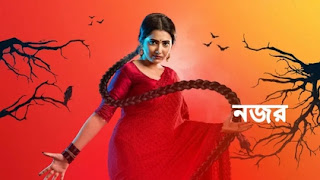
Since its abrupt end, some viewers can't stop boasting about the show that it got to a point where they advertised fake repeats and even listed Bengali adaptation Nojor (pictured above) as The Evil Eye season 3.

Ever since A Magical Love Story ended, there hasn't been a site of venomous snake or anything supernatural on Star Life even on Zee World as regional stations are the closest to viewing them dubbed while others are distributed in their original language with subtitles.


Amidst the phasing out of these shows sources state that Star Life picked up Bold And Beautiful and The Evil Doom which were scheduled for a late 2021 to mid 2022 release which never came to pass.

Joining that trio was the fake third season of The Evil Eye which is now considered a new season but supposedly on a new Indian entertainment channel that was set to replace Star Life.

This supposed channel was said to focus on Bengali which is similar to Hindi in an attempt to "differentiate" the offering from StarPlus but hey some of the content from Bengali are remakes to the Hindi content and vice versa.


The thing about this was Disney Star the owners of these brands already operated a Bengali channel Star Jalsha which is niche I mean every market has their niche. In South Africa, it is Tsonga, Sepedi and Siswati as Zulu, Afrikaans and Ndebele dominate the region.

The question would have to be why trade one group for another if the plan was to replace wouldn't it be better to source areas like Telegu, Tamil and Malayalam as they also reside in the Bollywood community under the Disney Star.

Zee TV had every chance to launch such a channel but instead opted for reruns channel, Zee One.