Why PBS Kids Africa Is Behind With The Rest Of The World?

Also Read

PBS Kids owned by the Public Broadcasting Station (PBS) is the most trusted educational brand for children aged 2-8. Since 2021, the brand has operated a number of blocks and linear channels in the United States, Africa and formerly Australia.

For those residing outside the United States may have noticed some rather bizarre variations from the American feed. I mean you have shows like Dinosaur Train currently in its fifth season with the Africa still wrapping up the second season I know shocking.

On top of that there's a lot of shows some fresh that have yet to be broadcast on the channel such as Let's Go Luna, Splash And Bubbles, Xavier Riddle And The Secret Museum, Ready Jet Go! and Clifford The Big Red Dog.

From what's understood here, consumers don't have longevity with PBS Kids as seen with Cartoon Network and Disney Junior globally. Despite the fact that some of this content such as Dinosaur Train and Cyberchase have been viewable in these markets.

Generally, PBS Kids hasn't got much credibility for these as the content is funded by taxpayers and foundations which just leads to curiosity as on how much ownership the main PBS brand has over this content.

I for starters don't mind how out of fashion PBS Kids may appear to some audiences. It's one of the few brands that acknowledge their much older properties I mean it debuted in 2019 across Africa airing shows like Mister Rogers Neighborhood and Time Warp Trio.

Aside from that, the main feed is repetitive and perhaps them introducing this content to newer audiences is another way to help build their offering. The international feeds doesn't focus solely on older content as there's shows like Donkey Hodie and Hero Elementary.

PBS Kids can be entertaining to the young and old.

Meta To Launch It's Twitter App This Week

Also Read

Twitter users have been facing a lot of issues over the past few months, but things got even worse last weekend after the company decided to limit the number of tweets users can see per day. To take advantage of this, Meta now seems to have confirmed that Threads – its new app to compete with Twitter – will be released later this week.

On Monday, a page that lets iPhone users pre-order Threads was made available on the App Store. The same page confirms that the app will be released on July 6-7 (depending on which country the user lives in). Meta has also launched a new webpage with a countdown ahead of the release.

Meta has been working on Threads for some time now, and it became known after some reports in May about the “Barcelona” project. Developed under the Instagram brand, Threads aims to be a direct competitor to Twitter, allowing users to share text, photos, and videos.

“Threads is where communities come together to discuss everything from the topics you care about today to what’ll be trending tomorrow. Whatever it is you’re interested in, you can follow and connect directly with your favorite creators and others who love the same things — or build a loyal following of your own to share your ideas, opinions and creativity with the world,” says the app description.

Although Threads is based on Instagram, it will have its own app. Expectedly, those with an Instagram account will be able to join the new platform with just a tap. However, some details are still unclear – such as whether users will be able to access Threads through a web browser. Another detail to keep in mind is that, at least for now, the app has no iPad version.

Insidus has heard from people familiar with the matter that Meta was first planning to launch Threads at the end of July. However, as many Twitter users are upset with the platform, Meta has decided to rush the launch of its new microblogging social network.

Ginx eSports TV Reportedly Up For Sale, Could The Channel Go Dark On The DStv Platform?

Also Read

The Esports Advocate can exclusively report that London-based gaming and esports media company Ginx TV Ltd. is exploring an acquisition or further investment and is being represented by London-based venture capital and private equity firm Capital A. In a perfect scenario—according to what is being pitched to VCs—an investor would acquire the company, keep its full-time staff intact (it lists 21 full-time employees and 17+ people in outsourced roles)— and leave the day-to-day operations in the hands of the current CEO, Michiel Bakker.

According to a document obtained by TEA being shared by Capital A to potential VCs, the unnamed esports media group (which TEA has confirmed is Ginx) is based in London, specializes in “creating and monetizing cross-platform (TV & digital) esports and gaming content,” and is “available to acquire.” Metadata from the document describes it as “GinxTV – Teaser V2” and lists multiple Capital A employees as points of contact.

It also notes that the company’s “experienced hires” have “near full autonomy on a day-to-day basis,” and that the “CEO is looking to stay,” which is a selling point to attract investors who would have concerns that leadership and staff might leave after an acquisition.

Finally, the document notes that the company has its own production arm, which it uses to produce a variety of video and provide content creation services for clients such as “publishers, brands and esports organizations.”

Ginx TV Ltd. CEO Michiel Bakker issued the following statement to TEA on Friday morning via email: “Ginx is always working on its capital structure alongside growing the company. We have built a profitable gaming/esports business with diverse, predictable, and recurring revenue streams. As Ginx becomes increasingly global and digital, as opposed to being a pure-play TV company, we are currently looking to bring on board investors that are aligned with that trajectory and can help us accelerate our growth. We are involved in several discussions, but I am not at liberty to disclose detail.”

Ginx has raised capital from a number of sources over the years including £569.1K ($679K USD) in December of 2015 through an equity crowdfunding campaign with Crowdcube, and undisclosed investments in September of 2016 from UK-based terrestrial TV networks Sky and ITV, who both took “significant minority stakes in the company.”

While Bakker claims that Ginx is a profitable business, the company realized losses of £162.9K ($194.3K) in 2020 and £263.1K ($313.9K) in 2021, according to public filings—Ginx has yet to file its FY 2022 financial report as of this writing. All told, the company has spent approximately £9.99M ($11.86M) since 2010. It is important to note that, due to the British company reporting requirements, a balance sheet loss does not necessarily contradict Bakker’s profitability claim. It should also be noted that the materials obtained by TEA, estimate that the company generated revenue of £2.2M, or $2.5M for FY 2022.

Credits: James Fudge

Ginx eSports TV CEO Steps Down After 13 Years

Also Read

Long-time CEO of gaming media company Ginx TV Michiel Bakker has announced his departure and is set to leave the company at the end of June.

Bakker made the announcement via LinkedIn, and while he did not share any future plans, he did mention that he is leaving the company with “mixed emotions.”

Founded in 2007, Ginx TV is a media company based in the United Kingdom. The company is known for its television channel, one of the world’s first TV channels focused strictly on gaming content. The company’s main channel has been rebranded to Ginx Esports TV in 2016, reflecting a shift towards esports. Apart from television, Ginx operates a gaming and esports news website, Ginx.tv.

Michiel Bakker first joined Ginx TV when the company was only three years old, in 2010. During his time at the company, Ginx has partnered with numerous esports, gaming, and other brands, and became an international company with a presence in many countries.

Bakker did not explain the exact reasons for his departure, but he did note that it is “high time for a fresh perspective, new ideas, and someone else to take the reins” of the media company. He added that change is a vital part of progress, and that he is proud of the work he did during his time at Ginx.

Ginx TV did not share news of Bakker’s replacement, but he did say that he is now “embarking on a new chapter in life.”

Bakker said the following via social media: “After an incredible 13-year journey at Ginx TV Ltd, it is with mixed emotions that I announce my departure from the company at the end of this month. It has been an honour and a privilege to serve as the CEO of Ginx, and I am immensely proud of what we have achieved together.

“One of the most important lessons I have learned in my professional career is that change is vital for growth and progress. It is high time for a fresh perspective, new ideas, and someone else to take the reins.”

An Among Us TV Series Is In Development

Also Read

An “Among Us” animated series is in the works at CBS Studios, Variety has learned exclusively.

The studio, via CBS Eye Animation Productions, has partnered with Innersloth, the independent game studio behind “Among Us,” to develop the series. Owen Dennis will serve as creator and executive producer on the project under his overall deal with CBS Studios.

Per the official logline, the series is based on the premise of the game, namely, “Members of your crew have been replaced by an alien shapeshifter intent on causing confusion, sabotaging the ship, and killing everyone. Root out the ‘Impostor’ or fall victim to its murderous designs.”

Titmouse (“Big Mouth,” “Star Trek: Lower Decks”) will serve as the animation studio for the series. Along with Dennis, Forest Willard, Marcus Bromander, and Carl Neisser of Innersloth will also executive produce along with Chris Prynoski, Shannon Prynoski, Antonio Canobbio, and Ben Kalina of Titmouse. No network or streamer is currently attached, but those conversations are said to be ongoing. CBS Eye Animation Productions produces in association with Innersloth. The show is covered by The Animation Guild rather than the WGA.

“Among Us” first launched in 2018 but saw a massive spike in popularity in 2020. In October of that year, it was number one on Google Play in 66 countries and in the top 100 in every country except for two. It was also number one in iOS in 55 countries. During Q4 2020, the game had nearly 500 million monthly active users, more than 4 billion views on YouTube, and more than 1.22 billion viewing sessions on Twitch.

Dennis is best known for creating the Cartoon Network/Max series “Infinity Train.” The pilot for the show originally debuted on Cartoon Network’s YouTube channel in 2016, with the first full season airing on the network in 2019. A second season followed in 2020 before the show moved to Max (then HBO Max) for Seasons 3 and 4 in 2020 and 2021. A series of ten shorts called “The Train Documentaries” was released in 2019. Prior to “Infinity Train,” Dennis worked on the popular Cartoon Network series “Regular Show” as a writer and storyboard artist.

Dennis is repped by UTA, Industry Entertainment, and Yorn Levine Barnes. Innersloth is repped by Big Pigeon for film and TV.

Development Alert: Childhood Favourite Arthur Returns To South African Screens For It's Final Rounds Thanks To PBS Kids

Also Read

The much-loved cartoon Aardvark is returning to South African screens with Season 17 premiering Monday 3 July on DSTV channel 313 at 4pm.

The premier will be a nostalgic moment for many parents who grew up watching ARTHUR and his many friends, and will now be able to introduce the adored character to their own children, continuing the legacy.

The animated series is aimed at viewers aged four to eight, helping foster an interest in reading and writing, encouraging positive social skills, and models age-appropriate strategies problem-solving strategies.

The show chronicles the adventures of ARTHUR (an eight-year-old aardvark) through engaging, emotional stories that explore real issues kids face. The comedy-like series tells stories from a kid's point of view without moralising or talking down. Situations on ARTHUR develop in realistic ways and don't always turn out as Arthur or his friends might expect.

It has also been honoured with numerous awards, including the prestigious George Foster Peabody Award and three Daytime Emmys for Outstanding Children's Animated Program.

Since its premiere, the series has been accessible through closed-captioning to viewers who are deaf or hard-of-hearing. In addition, ARTHUR made history in 1997 when the series became the first daily program to be described for viewers who are blind or visually impaired.

Magnum Pi Cancelled On NBC

Also Read

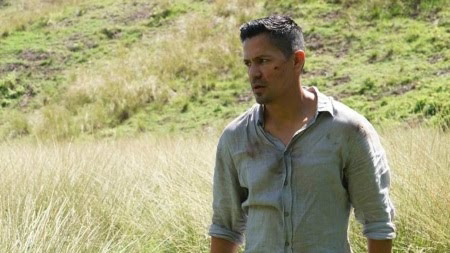
The Jay Hernandez-led reboot of the 1980s procedural will wrap its run with its upcoming 10 episodes on NBC. The news comes as the options on the cast were due to expire June 30, forcing NBC — whose studio sibling Universal TV co-produces the series alongside CBS Studios — to make a decision on either extending those deals or wrapping up the show. The network, which has recently passed on a number of pilots and canceled nearly all of its bubble shows, opted to let the show conclude with its remaining 10 episodes rather than to spend the money to extend the show’s stars as it’s unclear when production will resume amid the ongoing Writers Guild strike.

Magnum P.I. was canceled in May 2022 after four seasons on CBS. The series ranked as one of the highest shows on broadcast television at the time of its cancellation, prompting NBC to step in and save the show from cancellation with a two-season, 20-episode pickup less than two months later.

NBC is calling the 20-episode order a split season, a loophole that allows networks, studios and streamers to avoid giving cast, creators and crew annual salary increases in a practice that has been widely used by basic cable networks and streamers.

Eric Guggenheim serves as showrunner and exec produces alongside Justin Lin, John Davis and John Fox. Perdita Weeks, Zachary Knighton, Stephen Hill, Tim Kang and Amy Hill round out the cast of the series, which streams in-season on Showmax and otherwise on Paramount+.

The Tale Of Gargoyles: The Abandoned Project From The Walt Disney Company

Also Read

Gargoyles has, over the years, developed a cult following, one that has only grown with all episodes from the 1994-1997 series available to stream on Disney+. Rumors of a new animated series featuring the heroes have come up consistently since the series ended, and the seeds of a live-action take goes as far back as 1995, going so far as to have a screenplay drawn up. The initial success of the series had even spawned the idea of a Disney action universe, a more mature set of fare along the lines of what DC and Marvel had. Only Disney kept the series at arm's length, distributing the syndicated series through its Buena Vista Television arm. They really wouldn't attach the Disney name to it until changes were made for its third season. The series was popular, and toys and other related merchandise was flying off the shelves, so why wasn't it embraced wholeheartedly from the beginning?

Gargoyles begins in 1994, where gargoyles - winged creatures who awaken at night - assist the guards of a medieval Scottish castle from attack by the Vikings. Their leader, Goliath (Keith David), is caught outside the castle walls when daybreak hits, turning him into stone. The captain of the guards (Ed Gilbert) is behind the ruse that led Goliath outside and betrays the clan by letting the Vikings inside. All but a few of the gargoyles are smashed while in their daytime stone form, and the castle is destroyed. Believing the princess of the castle was killed in the attack, the court magician curses the remaining gargoyles in their stone sleep "until the castle rises above the clouds." Only the princess was saved by Goliath, who reunites her with the Magus (Jeff Bennett). Sadly, the curse can't be undone, so Goliath asks to be put under the same curse as his clan.

The Gargoyles are awakened when their castle is reconstructed atop a New York skyscraper by industrialist David Xanatos (Jonathan Frakes), whose intentions are villainous. Befriended by detective Elisa Maza (Salli Richardson), Goliath and his Gargoyle clan, who have taken on very New York names - Bronx (Frank Welker), Brooklyn (Bennett), Broadway (Bill Fagerbakke), and Lexington (Thom Adcox-Hernandez) - learn the truth about Xanatos and spend the nights fighting Xanatos' threats and all manner of evil.

'Gargoyles' Wasn't Like the Other Disney Fare
Goliath (Keith David) and Elisa (Salli Richardson) stand side by side in Disney's 'Gargoyles'Image via Walt Disney Television Animation
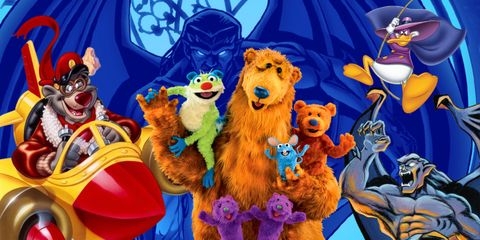
Gargoyles was unlike anything else in the mid-1990s, especially in comparison to Disney's other animated fare like Darkwing Duck and TaleSpin. It had far more in common with shows like Batman: The Animated Series as a darker, more mature offering, including a controversial episode, "Deadly Force", that spoke to the gun control debate. The mythology of the series, as well as its story arcs, ran deep, even incorporating Shakespearean themes throughout its run. The one truly unique aspect of the show for its time was its serialized storytelling, especially for syndication. Most series in syndication had self-contained episodes that could be viewed in any order, but Gargoyles had a sequential, overarching narrative that couldn't be aired haphazardly without sacrificing the storyline.

An in-depth interview with creator Greg Weisman with Polygon brings forward two other differences that set the series apart from its animated kin, and arguably live-action television series as well. The character of Detective Elisa Maza was a rarity. As Weisman points out, she was never a damsel in distress, saving Goliath's life just as often as he saved hers. She was half African-American and half-Native American, and the actress who voiced the role, Salli Richardson, is a woman of color, another rarity in the industry back then. Weisman also talks about how Lexington, one of the gargoyles, was gay. At the time, that trait couldn't be acknowledged without consequences, especially for a studio like Disney, so he was written as a gay character without explicitly stating such.

'Gargoyles' Season 3 Changed Everything
Goliath (Keith David) and Elisa (Salli Richardson) in a scene from Season 3 of Disney's 'Gargoyles'Image via ABC

When the time came for a third season, a number of circumstances spelled the end for Weisman's Gargoyles. Almost everyone at Disney that had championed the series was no longer around (Disney president and CEO Frank Wells tragically died in a helicopter crash, and other executives had bolted to DreamWorks), or had effectively been neutered (Michael Eisner was forced to give up being the final word on animated series). News from the O.J. Simpson trial was constantly preempting TV shows and the syndicated stations that were running Gargoyles cut to the trial coverage in lieu of airing the show, meaning episodes were being missed by the public, impacting the narrative, and changing the afternoon appointment viewing habits of the public.

Mighty Morphin Power Rangers blasted onto the scene, knocking Gargoyles off its perch atop its afternoon slot. Finally, when Disney bought ABC, they moved the series to the network's Saturday morning lineup, calling it The Goliath Chronicles to separate it from the first two seasons. Standards were significantly different from syndication for network television, especially when it came to Saturday morning fare The darker, more mature edge that made Gargoyles unique was dropped, the creative team had largely jumped ship, and the third season was shipped out to Nelvana Enterprises, a cheaper alternative that saw a marked difference in the quality of the animation... and not a good one at that.

Gargoyles was a show that was well ahead of its time and a gamble that, for a while, paid off. By making the series safe, unchallenging, Saturday morning fare in its third season, it fell into an undefined sameness where each show blended into the next. Now, the series can - and should - be enjoyed as it was meant to be seen on Disney+, a world-building narrative where each episode plays into the next. From its beginnings in medieval Scotland to the boroughs of New York in the present day, Gargoyles' nocturnal protagonists stand unparalleled, with ground-breaking elements that, even now, are unlike anything else in the entertainment industry.

Credit: Llyod Farley

Development Alert: Ginx eSports TV Ends It's Run As A Linear Channel In The United Kingdom, TV Channel To Remain Through On Demand Streaming Services With More Markets Rumoured To Follow

Also Read

Ginx eSports TV is a UK based gaming channel operated by ITV PLC that promotes all things gaming in the form of news, guidelines and even tournaments. Some of the content viewed on the channel include Top 10, Games Set To Music, Origins and The First Hour.

As reported by Sky this past week, Ginx eSports TV falls out of their offering by the end of June. Although, it would continue to broadcast on Sky Glass which is set to rollout as DStv Glass in South Africa within the next 24 months.

During the year, Sky alongside various pay-tv outlets across the world have been removing non-performing channels. Similar to MultiChoice, they're streamlining their offering and Ginx eSports TV happens to be one of those channels that fall under that criteria.

MultiChoice added the channel in South Africa by 2017 and haven't said much about its viewership or promote it as much as ESPN, WWE and SuperSport. So we only assume that the current scenario seen in the UK is a reflection of what's to come in South Africa at some point.

Ginx eSports TV is kind of niche and considering this is a mid tier channel the viewership has to be below average if not less than M-Net's 8K viewers. Not that the channel is bad but most gaming brands work better as generalists then lifestyle channels.

Prior to its demise in the UK, it's had been long speculated that MultiChoice was looking to scrap the esports channel at some point. But with SuperSportBET also catering to esports gearing up for a fall 2023 rollout we assume something e-sports will be on there.

Maybe this will be one way to retire Ginx eSports TV or give consumers other means to it's offering.