Speech: Leading The UK Into Digital By The Director-General Of The BBC, Tim Davie, At The Royal Television Society

Also Read

Good morning. Today, 100 years and 23 days after the first BBC broadcast, I want to talk about choices. Choices for us all.

Choices that have profound consequences for our society; its economic success, its cultural life, its democratic health. Our UK and its essence. Of what we hand to the next generation. Of growth.

Choices that concern not just the role of the BBC, but something bigger. About whether we want to leave a legacy of a thriving, world leading UK media market or accept, on our watch, a slow decline. 

Are we simply going to drift to the point where the emergence of vast US and Chinese players marginalise us, while we put on a very British brave face as they do so? Resigned to the fact that our culture and creative economy will inevitably be shaped by polarised platforms and overseas content. Or are we proactively going to take the steps to ensure that we tell our own stories, and remain the envy of the world?

Today I want make a simple case.  A case for growth, and the choices, as the UK, to own it.   

Too much of this debate is painfully “small”. In BBC terms, we understandably fret about domestic issues, political spats and latest headlines. And, because people care, we keep busy on a joyous treadmill of flare-ups and debates.  

One of my favourite quotes of Lord Reith is “the BBC will never broadcast anything controversial, and has no plans to do so.” If only.

But beyond the day-to-day, we urgently need to spend more time agreeing what we want to create that best serves our audiences, the economy and society.

Today I want to set out some of the choices that we need to make, and make the case for ambition.  

This will require the BBC, regulators, politicians – all of us - to work together and make clear decisions. To invest capital and set policy, deliberately, not simply live on hope and good intent.  To create a bigger creative sector supported by strong public service media and a thriving BBC. 

In short, we have reached a defining decade for the future of this incredible sector and this wonderful country.   

But first, a quick look back. This year has shone a light on a venture, a 100 years old, that has delivered outstanding shareholder returns: the BBC.  It has not come about accidentally. It is a triumph of smart invention and intervention. An inspired choice by those early pioneers as they reflected on what really mattered in life after the scars of war. They decided, amazingly, that broadcasting was not simply about money, it was  more important than that.  

It has led to immense returns to the UK public: economic growth, societal growth, personal growth. Value for all.   

It’s easy to forget what a remarkable story of success it is. And how much of it we take as given. Of course, the BBC is not perfect, we make mistakes, we struggle, we commit acts of self-harm, and our funding mechanic, the Licence Fee, is positively described by some as the least worst option. But step back a bit from the noise and look at our legacy.

There’s the creative health of the nation.

Ever since those early days in 1922 when 2LO crackled into life, we have backed our culture, through an enlightened blend of smart public interventions, brilliant commercial companies, and inspirational individuals.

At the heart of that ecosystem is the BBC. 

Critically, our universal brief means we do not simply look to maximise global efficiency and monetise a core audience. We support creativity in every part of the UK and its Nations. Our work helps us understand each other and find communal stories that underpin our national life.

9 in 10 people say it’s important for our media to reflect the lives of different people in the UK to each other. 

Then there’s our creative industries, a world leading economic powerhouse. 

£109bn in annual GVA – that’s bigger than the life sciences, aerospace, automotive, oil and gas sectors combined.

If we get it right, we have the potential to more than double that by 2030 growing way ahead of the wider economy, and delivering jobs across the UK.

The BBC as a catalyst for growth is proven. 

We support over 50,000 jobs – more than half outside London. We work with 14,000 suppliers.  

In Salford, the number of creative businesses has grown by 70% since we moved there in 2010.  In Cardiff, the creative sector has grown by over 50% since we opened Roath Lock Studios in 2011. 

New analysis from PwC shows that increasing the BBC’s footprint in an area by just 15%, doubles the creative cluster growth rate.  By 2028, the BBC’s ‘Across the UK’ plans can create more than 4,500 new creative businesses outside London, along with 45,000 jobs. 

But the BBC’s legacy is also about our democracy.

We face a growing assault on truth and free reporting. Recent data on our watch is stark and shocking.

In February, Freedom House in the US found that 60 countries suffered democratic decline in 2021, while only 25 improved. 

Only around 20% of people now live in what are considered free countries – that’s halved in 10 years. Journalism is now completely or partly blocked in 73% of countries.

The social psychologist Jonathan Haidt argues there are three forces that bind successful democracies: social capital; strong institutions; and shared stories.  Not a bad list if you are in my job.

But he also believes that social media, while having many benefits, has weakened all three. It weakens political systems which are based on compromise and it fuels mob dynamics that restrict a constructive process of dissent and debate.

Our own research shows that’s happening here, too. Over 40% of people are now worried about sharing views with those who have a different view.

Research by the European Broadcasting Union shows that well-funded public service broadcasters goes hand-in-hand with democratic health. The greater their audience, the more citizens tend to trust each other.

That is why the UK’s strong global voice is so precious. 

Today the BBC reaches nearly half a billion people weekly, a number that has been growing. We are the best known British cultural export – quite something when you consider the competition, from music to monarchy.

In India, our services reach 70 million people in 9 local languages. In the US, the BBC is now the most trusted news brand.

When our Russia Editor, Steve Rosenberg, interviewed Foreign Minister Lavrov, a must watch by the way, it got over 7 million views inside Russia.

So I think that if Reith were sitting here today, apart from giving me that withering stare, I think he would be amazed by what we have created, together.  

These successes are the result of deliberate decision-making and difficult choices. 

There was the birth of TV in the 30s, and the reshaping of radio in the 60s – when we said goodbye to the Home Service, the Light Programme, and the Third Programme.

The launch of BBC Online in the 90s. The launch of iPlayer in 2007 – a moment that, in the words of Reed Hastings, “blazed the trail” for global streamers.

Alongside these BBC moves, we have acted successfully as an industry. Freeview, Freesat, digital TV switchover, DAB, Radioplayer, Youview, all successful in developing our media sector, fostering competition but also enhancing public service broadcasting.

All these moments required a choice, a will, an optimism, and a generosity of vision. A desire to see the big picture.  

There are cautionary tales too. The infamous blocking of Project Kangaroo back in 2009, when the UK PSBs wanted to set up a streaming service.  

But, overall, there is so much to be proud of in what we have created together.  

However, today, I believe we are in a period of real jeopardy. A life-threatening challenge to our local media, and the cultural and the social benefit they provide. This is not an immediate crisis for audiences.  The choice of high-quality TV and audio has never been better. The threat is not about if there is choice, it is about the scope of future choice and what factors shape it.  

Do we want a US-style media market or do we want to fight to grow something different based on our vision? 

I sometimes read that the BBC needs to clock that the world has changed. I can assure you that we do not need convincing.  

The internet has stripped away the historical distribution advantage of having half of the TV channels or FM frequencies. In this world relevance, like trust, has to be earned.  

Industry analysts predict that we have probably seen the last year in the UK when broadcasters make up the majority of video viewing. Five years ago broadcast TV reached nearly 80% of young adults a week. Today it’s around 50%, and radical changes are happening across all ages. Tik Tok is now bigger than the BBC in video for 16-24s in the UK.

So today is the right time to ask the question, are we happy to let the global market simply take its course or are we going to intervene to shape the UK market?

Now, before looking to the future, let me just give a quick update on how the BBC is doing. 

We have been working on transformation rather than just managing decline. Despite market changes and cuts, we have coped well by focusing entirely on providing value to all. Not simply saying we are a good thing but being used.  

Our Value For All strategy is clear: ensuring we are impartial, delivering must-watch UK content and developing a world-class online offer. Supported by ambitious commercial plans. 

Nearly 90% of adults, and 75% of 16-34s came to the BBC every week, and every month nearly every adult uses us in the UK. These reach numbers have held up well. Over 30 million browses in the UK used the BBC online yesterday, the only online UK brand to really mix it with global players.  

When it comes to hours of video watched in the UK, the BBC remains bigger than Netflix, Amazon Prime and Disney Plus, combined. 

Editorially we have wind in our sails.  Award-winning shows from Time to Motherland.  9 million watched the launch of Frozen Planet II, a peak audience of 17 million watching the Women’s Euros final, 42 million streams of Glastonbury.  And the coverage of the Queen’s funeral showed what only the BBC can do.

More recently, in its first seven days since launch, episode one of SAS Rogue Heroes had an audience of 6.5 million, compared with 3 million for episode one of the latest season of The Crown.  

We’ve grown BBC Sounds to over 1.5 billion listens. 

And, in the midst of culture war storms and Twitter rage, the numbers of people saying we offer impartial news has held firm.

Commercially, BBC Studios has grown rapidly in the last 5 years delivering a stretching target of over £1.2bn in returns and growing profits 70%.

We also drove the UK economy. Our Across the UK plans are well underway and mean we’re on target for £700m of additional spend outside London by 2027/28.  For example, we’ve announced £25m investment in the North East, a new Birmingham base in Digbeth, and we’ve moved news teams. We relocated 8 Radio 3 titles yesterday in Salford. And we continue to invest in unique and strong content in the Nations and Regions. 

At the same time we’ve stepped up our commitment to a highly efficient BBC, fit to deliver maximum possible value. We’ve reduced our overhead rate to within 5% of our total costs. We cut over 1,000 public service roles last year.  All our senior managers are assessed and we are stripping away bureaucracy as we create a world-class culture.

Overall our progress over the last 2 years has been good. In many ways, thanks to the exceptional talent in the BBC, it has been gravity defying. But looking to 2030, it is not enough.

So now let’s look to that future. Imagine a world that is internet only, where broadcast TV and radio are being switched off and choice is infinite. There’s still a lot of live linear viewing but it is all been delivered online. 

Far from decline, could we harness the possibilities of this interactive digital landscape to increase public value and stimulate the UK media market? What would it actually take to deliver that? 

I think there are four choices that we need to make to give us a real chance of achieving success for the UK. They need urgent action. Namely: 

- Should we, as the UK, own a move to an internet future with greater urgency?
- Should we transform the BBC faster to have a clear, market leading role in the digital age?
- Should we proactively invest in the BBC brand as a global leader? 
- Should  we move faster in regulating for future success? 

Of course the answer to these choices is yes. 

I don’t intend to answer every question in detail today but let me outline some thoughts.

Firstly, we must work together to ensure that everyone is connected, and can get their TV and radio via the internet. This isn’t something to resist. A fully connected UK has very significant benefits for society and our economy. It would unleash huge opportunities for innovation.

For the BBC, internet-only distribution is an opportunity to connect more deeply with our audiences and to provide them with better services and choice than broadcast allows. It provides a significant editorial opportunities. A switch off of broadcast will and should happen over time, and we should be active in planning for it. 

Of course, there’s a bad way it could happen. Where access to content is no longer universal. Or is unaffordable for too many. Where the gateway to content is owned by well capitalised overseas companies. 

So, we must close gaps and guarantee accessibility for all. Forecasts suggest that by 2030, about 2million homes will still not be using fixed-line broadband and even in a few years 5% of the UK landmass may not be covered by 5G or 4G to provide content on the move.  Now I know that there is a renewed effort to drive this coverage by Government and the DCMS; this is critical.

While the BBC cannot fund the build-out it can collaborate with others to make a move to online attractive to all, and play a big part in educating people about  the transition. We will become more active as part of a coalition to make this happen. 

Let’s all work to plan it flawlessly and leave no-one behind, and ensure that UK businesses and audiences get maximum benefit.

In this new world, the next choice we need make is to champion a clear, market leading role for the BBC. How will we inform, educate and entertain in 2030?

The answer must be to differentiate and not copy.  

The BBC will focus its effort on the following in the digital world:

- Nurturing an informed society through impartial, trusted news and information
- Inspiring and supporting people of all ages with trusted knowledge and training
- Engaging audiences with high-quality local British creativity from across the UK

Over time this will mean fewer linear broadcast services and a more tailored joined up online offer. As examples, we will double down on the latest work in News on disinformation, or accelerate the drive to ensure that Network drama is sourced from across the UK which differentiates us from others.

We believe that if we drive this transition successfully we can deliver universality despite a world of intense competition. We will achieve this not by creating derivative or niche content but ensuring maximum relevance of our core output.  To be clear, by universality we mean three things, which global players do not do. Namely:

- Access: making sure all audiences in the UK can get to the BBC
- Relevance: making content that aims to appeal to all UK audiences not just monetizable groups
- Engagement: reaching and being used by the vast majority of UK audiences

In the future we will need to transform the BBC faster to deliver a compelling online offer.

We are working on how an IP BBC could be the best version of the BBC shaped around people’s interests and needs. A daily partner to your life, bringing the BBC together in a single offer with personalised combinations.  A world in which local news, areas of interest and hidden gems can be found more easily.  

Digital offers a huge opportunity to unlock more audience value but it requires big organisational change: a radical overhaul of how we use data, a heavyweight world-class tech team, new operating models, new creative solutions and ideas. Imagine news re-imagined for the iPlayer or increased functionality when watching the game online. 

We will be world-leading pioneers in this. No-one in the world has created a digitally led public service media company of scale and the global opportunity for us is there for the taking. 

Within the BBC this means significant change. We will have fewer brands overall, and consolidate more activity behind a simple, single brand in the UK: the BBC. And you’ll see this globally as well. We will also simplify sub-brands such as BBC News. You can see a first step in our bringing together of the BBC News Channel and BBC World News as one brand: BBC News. 

We will share more plans in this area in the coming months. 

Inevitably all this requires another choice and that is to actively, dare I say happily, invest in the BBC. 

Any transition of a legacy, broadcast organisation to a digital future needs capital. As the owner of even the biggest companies are finding out, it is not for the faint hearted. Moving to digital is not the challenge in of itself, moving to digital while not losing most of your audience and burning millions of pounds unnecessarily is the challenge.   

In the BBC we are privileged to have the Licence Fee until 27/28 but if you take the period 2010 to 2028, we forecast that core funding for the BBC  has been cut by a whopping 30%. Now my key metric is providing great audience value for that fee. But others have been driving up pricing and driving up media costs reducing the BBC’s ability to deliver great value. As we look to the 2030s, we are open minded about future funding mechanics. But we are clear that it is critical that we need a universal solution that fuels UK public service growth not stifles it while offering  audiences outstanding value for money.

Of course, the latest settlement did include the increased debt facility for BBC Studios which was welcome, and we are ambitious about its prospects. Alongside commercial plans, we will keep cutting costs to invest and attract more partner investment as well such as the latest deal we announced with Disney on Doctor Who.  But under the most ambitious scenarios, this will not change the need for serious public service investment.

And in the short term we will need more money to support the World Service to avoid further cuts and we will be discussing this with the FCDO. The Russians and Chinese are investing hundreds of millions in state backed services. We have a choice to make.

We will of course complement this world service growth with ambitious plans for BBC Studios.

The BBC is one of the most powerful and well recognised brands on the planet and we should be backing it. It’s as simple as that.

Lastly, we need to regulate for success at speed.

This is not a new theme. It’s no secret to anyone here that our legal and regulatory environment has not kept pace with the market. 

The Digital Markets Act, Online Safety Bill, the Data and Digital Identity Bill, and the Media Bill planned for this Parliament are essential. We need rules for the prominence, availability and inclusion of PSB content in new platforms, in video and audio. Organisations providing content need the detailed data that will be the lifeblood of success in the new world.  

But it cannot be right that we have to wait years for legislation to recognise change in our sector.  

So we need a regulatory framework that is proactive. It must be agile – able to respond without endless consultation and process. I am pleased that Ofcom is working in this area.  

Part of this is allowing the commercial arm to thrive and a regime that is ex post, not ex ante, responding to obvious harm when it occurs, not defining every possible negative outcome in advance and restricting UK innovation as a result.

So, in summary, four choices for our future. 

Move to an internet future with greater urgency

- Transform the BBC faster to have a clear, market leading role in the digital age
- Proactively invest in the BBC brand as a global leader
- Move faster in regulating for future success urgently
- Shaping the online future of the UK to work for all of us. To lead not to follow.  To grow.

Thank you.

Roundups #131: Phineas And Ferb Gets A Two Season Order On Disney Channel And Disney+, 3AM: The Driver Coming Soon To KIX And Decisions Makes A Comeback On Telemundo Africa Ahead Of Nurses S3

Also Read

40 additional episodes of Phineas And Ferb had been ordered on Disney Channel and Disney+

Disney Branded Television has announced that it has signed a brand new overall deal with Dan Povenmire, who is the co-creator and executive producer of the global super-hit “Phineas and Ferb,” which includes production of 40 all-new episodes of “Phineas and Ferb,” a second season renewal of the animated superhero series “Hamster & Gretel” and the development of live-action projects.

“Phineas and Ferb” is a five-time Emmy Award-winner and the most successful animated series for Kids 6-11 and Tweens 9-14 in Disney Television Animation history. Since its premiere, “Hamster & Gretel” ties as the #1 cable series among Kids age 6-11 delivery.

The announcement was made during a presentation at the Television Critics Association press tour by Ayo Davis, president, Disney Branded Television, who said in a statement:

“Dan is renowned for his ability to create universally beloved stories and characters with both heart and humor. We couldn’t be happier to continue our collaboration with him and bring back the iconic ‘Phineas and Ferb’ in a big way.”

Regular Nick:
- Could Universal Kids be the next channel to close down from NBCUniversal?
Here are other ways to view PBS Kids
The Twisted Timeline Of Sammy And Raj coming soon to Nickelodeon
Predictions: Nicktoons and Boomerang's untimely demise

Second instalment to 3AM launches on KIX

3AM serves as the channel's first attempt at TV series which was unveiled last year with its first instalment titled The Office. Now the channel will be rolling out the second out of five instalments from the anthology titled The Driver.

A taxi driver who is constantly judging others by his own standards, also reads into their every move and sets out to help 'victims' in his own way. When a woman he likes seems to be bullied by her son, he goes about setting things right for her, even resorting to turning himself into a cold-blooded serial killer.

Produced by Thrill, a general entertainment channel also owned by Celestial Tiger Entertainment. It stars Coby Chong, Thor Yin Wei and Irfani Zhang.

DStv Flex:
- February on The Home Channel
February on HONEY
Reyka renewed for season 2 on M-Net
What to expect this January on Qwest TV?

Telemundo counts down the days to Nurses S3 with Decisions

Earlier in the month, Telemundo welcomed back a fan-favourite Fearless Heart (Corazon Valiente) for the 100th time onto Africa's screens and with Nurses reaching its climax for the second season the channel opts for fan-favourite shows with Decisions.

The anthology tell stories that are affecting ordinary people today. Inspired by high profile research, cases of human identity, social and political struggles, each episode focuses on a transcendental decision that will change the lives of the main characters in a moving, extraordinary and radical way.

It features a variety of cast members including Jorge Luis Pila, Laura Flores, Litzy, Jonathan Islas and Ana María Estupiñán.

Decisions is expected to make a comeback on January 26th with season 3 of Nurses set to air on February 13th.

Everyday Novelas:
- Ramo coming soon to eVOD
Forbidden Passion season 2 not moving forward on Telemundo
Nurses returns for a season 3
The origin story of Forbidden Passion

Roundups #130: Iwayu Created By Set To Debut On Cartoon Network In 2024, Zoey 101 Is Getting A Feature Film On Paramount+ And Conspiracy Theory Surrounding kykNET Lekker's Availability Finally Revealed

Also Read

New Nigerian animated series loading on Cartoon Network

Based on the graphic novel series from writer Roye Okupe and artist Godwin Akpan, HBO Max and Cartoon Network's upcoming Iyanu: Child of Wonder will be heavily influenced by the Yoruba people of Nigeria.

Financed and overseen by Lion Forge Animation, the 2024 animated TV series chronicles the tale of Iyanu, an orphaned teenage girl with no memories of her upbringing who yearns for a simple, normal life. Those dreams get shattered when a set of circumstances triggers Iyanu's dormant divine abilities. Teaming up with two other teenagers, Iyanu embarks on a quest to confront the Corrupt, a great evil rising in their homeland that threatens humanity. Along the way, Iyanu will slowly uncover the truth about her past, parents, powers, and destiny as the Chosen One.

The epic superhero adventure promises to draw from Nigerian culture, music, and lore. In addition, creator Okupe has written and directed multiple episodes. Lion Forge's head of production Saxton Moore, who serves as supervising director, and executive producer David Steward II recently spoke about adapting the graphic novel, cultural representation, Iyanu's quest, and anime influences.

Regular Nick:
- Kartoon Channel expands to Africa
- Could Universal Kids be the next channel to close down from NBCUniversal?
Here are other ways to view PBS Kids
The Twisted Timeline Of Sammy And Raj coming soon to Nickelodeon

Another Nickelodeon revival gets the greenlit for Paramount+

Zoey 101 star Jamie Lynn Spears announced on Instagram a reboot of the Nickelodeon series, titled Zoey 102, is coming to Paramount+.

“IT’S OFFICIAL! 🎬 Are you ready…. @paramountplus @nickelodeon,” Spears wrote in her Instagram caption on Thursday, teasing the show’s iconic theme song, which she sang.

The film was written by Monica Sherer and Madeline Whitby, according to the script shown in the Instagram post. Variety reported on Thursday that production has begun on the movie, and it is expected to be released later this year.

The Instagram post shows a photo featuring the names of some of the original characters, including Chase (Sean Flynn), Logan (Matthew Underwood), Michael (Christopher Massey), Quinn (Erin Sanders), and Stacey (Abby Wilde).

Paramount:
Conspiracy Theory: The introduction to Nick Jr. Global
The Smithsonian Channel is closing down in the UK
VH1 is being redirected to BET
MTV Hits no longer available in South Africa

kykNET Lekker is part of a mysterious open window

In December 2022, MultiChoice opened up kykNET Lekker (DStv 148) which was exclusive to only Access customers to their DStv Premium, Compact+, Compact and Family with not much info available as it occurred prior to the festive holidays.

As school's reopened and consumers reverted back to their daily lives, a source at kykNET was able to confirm that kykNET Lekker is in fact an open window but couldn't provide any more details other than what you already heard.

Basically, the kykNET Lekker's open window is what has been seen from 2022 - a mystery. The channel isn't listed on other packages compared to when channels like Nickelodeon have open windows and them listed on that package and the other having to be the lack of info regarding the channel.

DStv:
MultiChoice might lose yet another two channels
Could Russia Today be removed from the DStv platform?
Qwest TV coming soon to Showmax
eMedia's 4 channels to go dark on the DStv platform

Afrikaans Voice Actors For Daai Crazy Somer Including Additional Cast Members For Die Put Season 2 And Elif Season 3

Also Read

All the credit goes out to Die Afrikaans Voices actors.pagie

Daai Crazy Somer

Staain Bruwer as Ahmet Tunali
Elzabe Zietsman as Emel Yaman
Adrian Steyn as Sancaktar
Kevin Smith as Selcuk Taskin
Markus Haywood as Akgun Gokalp Taskin
Steven Sterling as Arda Ates
Caidan Bouwer as Altay Kara
Rowlen Ethelbert Von Gericke as Kaan Gok
Jacques Gombault as Selim Kara
Francois Coertze as Metin Yaman
Natasja Jacobs as Serap Gok
Zetske Van Pietsen as Canan Kara
Izel Bezuidenhout as Yagmur Jasmine Kara

Die Put

Keeno-Lee Hector as Sedat
Marcel Van Heerden as Yücel
Cantona James as Azer
Wilhelm Van Der Walt as Selim
Conradie Van Heerden as Timsah

Elif

Roxanne Blaise as Layla
Izaan Du Toit as Sitare

Roundups #129: Perfect Husband Makes It Freemium Debut On Zee One, The Cartoonito Channel To Launch On Boomerang CEE By March 18th And Doodsondes Returns For A Fifth Season On e.tv

Also Read

Zee World rebroadcast coming soon to Zee One

In 2021, Zee World an international entertainment channel owned by Zee Enterprises acquired rights to air family drama Perfect Husband or as it's called in India Perfect Pati. After a year, more consumers will have access to all the drama in store.

Perfect Husband explores the non-idealistic married life of Vidhita and Pushkar and tries to question the thought that whether an ideal son is capable of being an ideal husband. It stars Farman Haidar, Shamu Akhtariya Moulik and Alok Nath Pathak

It premieres 20th January on Zee One prior to that will be the launch of historical drama Razia Sultan and second family drama Broken Bonds on Zee World.

Everyday Novelas:
- 5 Turkish shows rumoured to rollout in South Africa
- Ramo coming soon to eVOD
Forbidden Passion season 2 not moving forward on Telemundo

Boomerang CEE will be no more from March 18

Viewers in Balkans, Baltics, Benelux, CIS, Caucasia, Central Europe, Central and Eastern Europe, East-Central Europe and Eastern Europe bid farewell to Boomerang as Warner Bros. Discovery welcome a new channel, Cartoonito.

Cartoonito is a place for preschoolers and their families. They are welcomed with open arms by individuality and originality. The youngest and their parents or guardians can enjoy familiar characters and stories from leading creators, as well as brand new series and lots of laughs. discovery.

Some of the new shows lined up for the channel include Batwheels, Bugs Bunny Builders, Scooby-Doo And The Mystery Pups and Jessica's Big Little World. More feeds are expected to follow.

Regular Nick:
- Boomerang set to rebrand to Cartoonito in parts of Europe
- Could Universal Kids be the next channel to close down from NBCUniversal?
The Twisted Timeline Of Sammy And Raj coming soon to Nickelodeon

Doodsondes 5 is coming to e.tv this August

e.tv, the most viewed English channel operated by eMedia Investments which is home to various local productions and international content wrapped up the fourth season to Doodsondes last week with the fifth season only being made available by August.

The fifth season goes as follows:

Six months have passed since the explosion and nothing is the same anymore. As Yildiz's life evolves in a completely different direction, Ender's arrival will help her cope with the problems she is experiencing. Yildiz's next-door neighbor, Kumru, who has just entered her life, falls into everyone's lives like a bomb with her different character.

Season 5 ensembles Sevval Sam, Eda Ece, Berk Oktay, Biran Damla Yilmaz, Murat Aygen, Ece Dizdar, Melisa Dogu, Baris Aytac and Serkan Rutkay Ayiköz.

Openview Plus:
Reviewing major changes coming soon to the SABC
A look at former NBC soap, Passions
Die Vertroueling coming soon to eExtra

Roundups #128: Dungeon And Dragons TV Series Has Been Ordered By Paramount+, Kartoon Channel Greenlit New Roblox Inspired Reality Series And Plot Synopsis For HBO Max Upcoming Series Velma Scares Away Potential Viewers

Also Read

Another video game is getting a TV adaptation

Paramount+ has given an eight-episode, straight-to-series order to an adaptation of Hasbro’s wildly popular Dungeons & Dragons fantasy role-playing game franchise. Red Notice filmmaker Rawson Marshall Thurber wrote the pilot script and is set to direct the first episode of the series which will be a co-production between eOne and Paramount Pictures.

eOne, the lead studio, took the project out in November, garnering interest from multiple buyers, with Paramount+ ultimately landing the show in a competitive situation. eOne and Paramount Pictures are partnering on the Dungeons & Dragons series after also co-producing and co-financing the upcoming Dungeons & Dragons: Honor Among Thieves movie directed by Jonathan Goldstein & John Francis Daley, which premieres March 31.

At Paramount+, the Dungeons & Dragons series will join Halo, the video game adaptation, which is one of the streamer’s most popular originals. Over the last couple of years, there has been a resurgence in bringing gaming titles to television, and this is the latest example.

Insidus Games:
- Powerpuff Girls Snowboarding
- Baby Felix Halloween
- Looney Tunes Monster Match
- Thor: The Dark World

Roblox TV series is coming to Kartoon Channel

Aimed at tweens, Kidaverse Roblox Rumble (10 eps between eight and 15 minutes long) will follow a group of contestants ages eight to 12 as they compete for a grand prize of US$1,000.

The kids must avoid getting eliminated in each round by winning a variety of physical games, including everything from an arctic obstacle course, to a dune buggy race. GBI will also turn these offline challenges into Roblox games.

Former NFL star Rashad Jennings (pictured) will host the series, which should launch on GBI’s Kartoon Channel! later this year. Jennings is an avid gamer himself, and the author of The Coin Slot Chronicles, a kids book series published by Zonderkidz. 

Regular Nick:
- Could Universal Kids be the next channel to close down from NBCUniversal?
Here are other ways to view PBS Kids
The Twisted Timeline Of Sammy And Raj coming soon to Nickelodeon
Predictions: Nicktoons and Boomerang's untimely demise

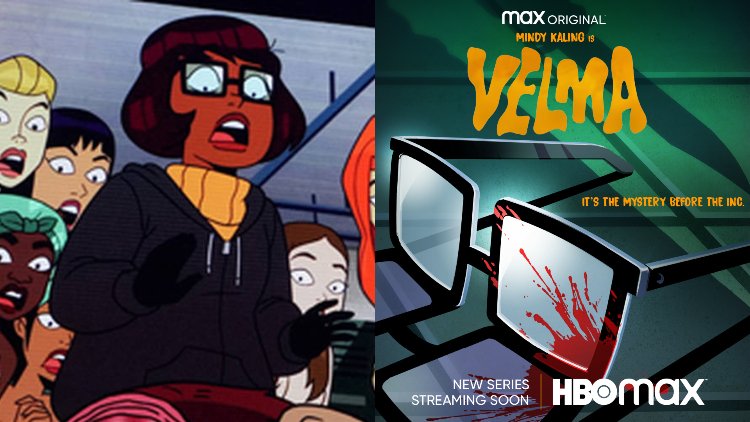
Velma is receiving criticism from several Scooby-Doo fans

HBO Max’s latest adult-oriented animation Velma will be premiering on Jan. 12 and fans of the Mystery Inc. Gang have been anticipating the Scooby Doo gang origin story (minus the mystery-solving dog). The show is executive produced by Mindy Kaling of The Office and The Mindy Project fame and the star will voice the near-sighted main character as she forms relationships with the rest of the Scooby crew. As the show’s premiere date draws closer, Velma‘s plot synopsis is making the rounds on social media and even the most diehard Scooby fans are not impressed.

A tweet by @LightsCameraPod shared the synopsis, describing it as “certainly something.” Twitter users evidently agreed and quickly began roasting the synopsis which reads as follows:

“At Crystal Cove High School, Daphne (Constance Wu) is a popular mean girl orphan who deals drugs because of a dark family secret. Her boyfriend Fred (Glenn Howerton) personifies mediocre white richness. His mansion holds a dark secret — and he has teeny widdle privates, a subject of much conversation. “Shaggy” has become Norville (Sam Richardson), a school-newspaper striver friendzoned by his beloved Velma. He worries he’s a beta male; remember that lame humor concept from 20 years ago?”

Aşk-ı Memnu: Telemundo's Forbidden Passion From The Beginning

Also Read

Forbidden Passion (Pasion Prohibida) is a 2012 soap opera produced by Telemundo Studios that told the story of a woman's scorn over her mother after discovering that her she cheated on her father prior to his death so she married the man she chased after there she falls for his nephew.

It starred Monica Spear and Jencarlos Canela alongside Roberto Vander, Mercedes Molto, Rebecca Jones, Henry Zakka, Jorge Consejo and Carmen Aub.

The original produced by Ay Yapım (Turkey) went a similar path with the likes of Beren Saat, Kıvanç Tatlıtuğ, Selçuk Yöntem, Hazal Kaya & Nebahat Çehre which was set in the contemporary Istanbul instead of the 19th century setting as seen in Halit Ziya Uşaklıgil's 1899 novel of the same name.

Everyday Novelas:
- Forbidden Passion season 2 not moving forward on Telemundo
Between You And Me now on Zee One
Eternal Love coming soon to Star Life

Aside from Aşk-ı Memnu (Forbidden Love), Ay Yapım also worked on other productions part of which has already viewed in South Africa such as Fenix (Alev Alev), Impak (Çarpışma), Stiletto Vendetta (Ufak Tefek Cinayetler) and Die Put (Çukur).

Aşk-ı Memnu was broadcast between 2008 to 2010 with a total of 2 seasons and 79 episodes on Kanal D. It pulled 10 million viewers during its premiere with a further 20 million added within the second season proving to be a success for the network.

Telemundo:
Nurses returns for a season 3
Prediction: what to expect on Telemundo in 2023?
Lord Of The Skies renewed for season 8

Sources on IDMB gave it a perfect score and Aşk-ı Memnu was considered one of a kind for the music, storyline and characters. It even walked away with 8 award winners most of which were for Beren Saat and Kıvanç Tatlıtuğ alongside the series.

Aşk-ı Memnu has been viewed in various territories including America, Ethiopia, Egypt, Algeria, Saudi Arabia, Mexico, China and several others.

Since it's debut, a number of adaptations have already been filmed with Pasion Prohibida on Telemundo in America, followed by Dil Sambhal Jaa Zara on StarPlus with the latest version Fructul Oprit on Antenna 1 in Romania proven to be the most controversial of instalments.

Recap: Forbidden Passion Season 2 Was Scrapped Due To Monica Spear's Passing

Also Read

Forbidden Passion is a 2012 drama series produced by Telemundo Studios that followed the long road love story of Bianca and Bruno. I don't want to spoil it or give too much basically the female lead got involved with her lover's uncle.

Based on the 2008 Turkish drama Aşk-ı Memnu which derives from the novel of the same name. It starred Monica Spear and Jencarlos Canela alongside Roberto Vander, Mercedes Molto, Rebecca Jones, Henry Zakka, Jorge Consejo and Carmen Aub.

From what a certain deleted article mentioned before passing, the series was renewed for a second season and some of the cast were to set to reprise their roles including Monica Spear and the part in bold shouldn't be read if you haven't watched the show.

Everyday Novelas:
Between You And Me now on Zee One
Eternal Love coming soon to Star Life
Fearless Heart coming soon to Telemundo

The second season would have seen the revival of Bianca after she committed suicide on her ex lover's wedding which never happened following her passing. Basically, the network loves to revive characters that were reported dead but who cares we got Lord Of The Skies S8.

Now the reason a second season ended up being scrapped with no chance of it in the coming future I mean I wouldn't be shocked if it was rebooted had to do with the unfortunate passing of Monica Spear with Forbidden Passion being her last project.

For those who weren't aware of the whole matter it goes as follows:

Monica Spear, 29, a soap opera actress, and Thomas Berry, 39, died after being attacked when their car broke down at night on a highway in central Venezuela in January.

Their daughter, Maya Berry Spear, suffered a leg injury but was in a stable condition after the attack that put a spotlight on the country's soaring murder rate.

The three men confessed to their involvement in the murder, the public prosecutor's office said in a statement.

Jean Carlos Colina, 19, got a 26-year sentence, while Jose Ferreira Herrera, 18, and Nelfrend Jimenez Alvarez, 21, were jailed for 24 years, the statement said.

Telemundo:
- Nurses returns for a season 3
- Prediction: what to expect on Telemundo in 2023?
- Lord Of The Skies renewed for season 8

What happened to little Maya?

14-year-old Maya Berry Spear, daughter of Monica Spear, was legally adopted by the brother of the remembered former beauty queen Ricardo Spear and his partner, actress Daniela Bueno, who signed the papers in August this year.

Let us remember that since Monica's tragic death, those who were in charge of little Maya were her maternal grandparents, Rafael Spear and Inge Mootz, but she always grew up surrounded by the love of all her family, especially her uncles.

"I witnessed how he was busy, at the time from his role as an uncle, to give her values and fill her with love." Ricardo has a generous heart and has always been very protective and loving with her. We knew it came with a huge responsibility, however, we took on it and today we are happy about the decisions we made. "Our family is built from will and this bond is forever," Daniela told People in Spanish.

How do you think Forbidden Passions season 2 would have turned out had it finished production?

Vince McMahon Reportedly Looking Into Returning To WWE In Order To Sell It

Also Read

He left control of the WWE to his daughter Stephanie and son in law Triple H, real name Paul Levesque, a wrestling legend himself.

But now, according to Wall Street Journal, McMahon is looking to make a WWE comeback in order to help sell the sports entertainment giant.

He still has majority voting power through his ownership of WWE’s Class-B stock and is believed to have informed staff of his plans to return.

McMahon is said to have told the company he is electing himself and two former co-presidents and directors, Michelle Wilson and George Barrios, to the board.

Superhero:
- G4 has been shut down
- Showmax to become exclusive home of WWE
- 10 real freak accidents on WWE

But the move to reinstate him, something the board previously rebuffed, and the others will require three current directors to vacate their positions.

Rumours of a sell have swirled for years despite the WWE receiving a $1BILLION cash injection after selling US rights to the WWE Network to Peacock.

McMahon decided to leave the WWE last summer following a series of scandals.

There were claims he paid an ex-employee $3million to stay quiet about an affair.

The probe began in April 2022, finding non-disclosure agreements involving claims made by female ex-WWE employees of misconduct by McMahon and John Laurinaitis, the head of talent relations.

WWE:
- Could the WWE channel be exiting the DStv platform?
- NXT Europe to rollout later in the year
- The controversial history of The Fabulous Moolah

The WWE put out a statement on confirming McMahon "voluntarily stepped back from his responsibilities" within the company.

The American bought Capitol Wrestling Corporation, the holding company that owned the then-World Wrestling Federation from his father, Vincent J McMahon, in 1982.

He expanded the company during the pro-wrestling boom in the 1980s and over the years, WWE has cited McMahon as the key to the company's success.

It has seen them rocket to the top of pro wrestling, a position they have maintained throughout their existence.