Escaping Gibby: A Look Into The Life Of Noah Munck From The Comfort Of His Sadworld

Also Read

When he appeared on set you knew something funny or strange or downright uncomfortable was about to happen.

Gibby was a chubby, outlandish yet lover character casted on Nickelodeon's most popular live-action series in history, iCarly. Noah Munck is the actor behind the Gibby character. He was originally suppose to be on 1 or 2 episodes but he provided so much comedic value that the producers kept him on as a regular.

Overtime, Gibby got tired of the corny, childish humour and constantly being the butt of the joke brought a lot of ramifications in his real life including people shutting his name out loud to take his shirt off and dance. You'll probably be surprised to find out what Noah's career looks like today which consists of cryptic and esoteric videos alongside an underground music career.

Today, we're gonna look at how Noah's life was impacted by iCarly and how he managed to escape his identity as Gibby.

Noah Munck was a typical Orange County teenager who played football and went to public school. He knew he was interested in arts so he got into acting classes which led to him doing plays and performances. His acting classes would have talent agent auditions where agents would come and look for the next big star.

At 10 years old, he got an agent who got him his first audition which was for the show iCarly. The audition was just for an episode or 2 but the production team realised how valuable he'd be as a goofy side character so he became a regular for 57 episodes.

iCarly was about a young girl who ran a internet blog with millions of viewers. Her best friend Sam is her co host, her friend Freddy is their filmer/tech support and it is all filmed in the upstairs of her brother's apartment.

Regular Nick:
- February on Disney Channel and Junior
The Twisted Timeline Of Sammy And Raj to rollout on Nicktoons in Africa
Moonbug Kids To Distribute New STEAM Focused Series, Ocean Explorers
New Bear Grylls series is coming soon to Da Vinci Kids

Gibby is just a kid that goes to school with them, he's an easy target for jokes and he is someone they can pick on. By the end of season 1, he became more of a friend to them a wacky friend but he has a lot of endearing qualities to him. He's sweet, very friendly, pretty stupid but he isn't someone you want to bully.

He was totally unrelatable consistently doing ridiculous things that you're totally excited for the unpredictability that he would bring next. He was mostly famous for saying his character name as a catchphrase and taking his shirt off frequently that it became a normal thing.

At the time, Noah didn't this as iCarly was his first acting job ever so he was basically willing to do anything. However, Noah was aware of what people were saying about him online. iCarly was a TV show about a web show that actually had a website with blog posts and trivia. Viewers could also leave comments on the website.

Noah said at the age of 10/1 he was reading rude comments about his appearance which made him feel bad. His parents discovered a website for people with fat boy fetishes that he was posted all over. Needless to say, Noah had mixed emotions about the whole taking his shirt off thing.

His parents never forced him to continue acting because it was his passion. They were always around and kept a close eye on him. Noah speaks nothing but the highest of praise for his parents.

In a tweet, it was revealed that Noah and his iCarly co-star Nathan had a love for dubstep. Noah said when he was around 13, one of the iCarly crew members Daniel Gonzalez gave him MF Doom and Dayla Soul mixtapes which drove his love for music and led him to become a music producer/DJ.

The last iCarly episode was filmed later in 2011 and by season 4 and 5, Gibby was the main character, his success and evolution was popular in iCarly that series creator Dan Schneider felt his character deserved his own spinoff TV show of the same name which remains a mystery.

There was a pilot episode filmed and edited according to Dan but never aired or leaked onto the internet. All that was available was the title card and logo for the show alongside the script for the very first episode, photos of the cast and set it was filmed. No one knows what happened, all that we know is Gibby never got his own show and 2012 marked the official end of iCarly.

5 seasons of what people consider to be the best live-action show of all time, Noah stayed busy trying to get roles in other projects. Later in 2012, he got a lead role in Nicky Deuce which is meant to the reboot of The Sopranos which has some of the original cast members.

The film didn't go to theatres and it isn't highly praised or anything but acting alongside those legends was an absolute accomplishment. After this film, Noah was sick of children's TV and the corny humour that he knew it was time to leave that behind.

In 2013, he went back to high school for his senior year, he doesn't consider himself a social outcast but had a difficult time mixing with kids who knew each other their whole lives. He would spend most of his free time on Ableton learning how to make music.

Insidus Games:
Bugs Bunny & Lola Bunny: Operation Carrot Patch
Buzz Lightyear Star Command
Fix It Fun! Bob The Builder
Daffy Duck: Fowl Play

He produced dubstep under the name nobsik then moved on to EDM trap and even experimented with rapping a little bit. It didn't take him long to want to get back into acting luckily he landed a role as Naked Rob in the 1980s based sitcom, The Goldbergs.

Noah acts as a side character that is a best friend to one of the main characters, he's starred in several episodes across 9 seasons and somehow managed to bag shows that managed to last him an average amount of seasons.

However it seemed as if Noah had the ghost of Gibby lurking around him. His new passions were not met up with the utmost praise from fans, he was 18 at the time and a few years removed from Nickelodeon.

Whenever he would post about his new projects or anything he was interested in, he'd be flooded with troll and hate comments, accompanied by people who would make him feel insecure about his appearance. He abandoned the Noah Munck Twitter and Instagram because of trolls and people calling him Gibby.

Gibby was kind of a punching bag in the show so he feels that the fans do it back to him. Not figuring out how to seperate Gibby the character and Noah Munck in real life. Noah doesn't take it too personally but it gets tiring when you want to move on your life and talk about your interests and everyone wants you to remain that thing as you were at the age of 13.

He did also deal with people demanding him to take his shirt off literally yelling across a restaurant while he is eating with his family. One time, a random girl just jumped on his back while he was walking across the street. He started to resent the Gibby character a little bit.

Noah is truly a sweet and wholesome guy, he didn't want to resent his past, it led to an angsty face for him. He really leaned to his passion of SoundCloud rap and producing. He started an obscure YouTube channel called Sadworld Online

Then 20 year old started posting his material which included poorly scripted shitpost comedy that quickly developed a cold fanbase. All the music in the YouTube series was produced by him which helped fans get interested in his music. The raunchy side of humour is something we all needed, the TVMA rated Gibby that no one could make fun of Noah anymore because he embraced his appearance and leaned to it for comedy.

He genuinely built a fanbase of his new art, at one point it bothered him that his embarassing moments were on the internet forever now he looks back at the Gibby character fondly.

Sadly, Gibby did not make a return for the iCarly reboot in 2021 or make an appearance in season 2. A fan asked Jake Hogan, a writer on the iCarly reboot about Noah's absence and replied "we approached him".

This means that they had reached out to him but he denied it could have been a couple of things. He was probably busy working hard on another show and side projects. Another reason similar to how anyone would feel about reboots he wants to leave Gibby in the past.

Only in the past few years did he come to terms with the Gibby character before that he did mixed emotions. He knew that if he had to return for the reboot he had to relive the struggles of Gibby where people will flood social media about his appearance, his acting career would hit the mercy of one character. A lot of actors want to outlive their roles plus we all know that they'd want him to take his shirt off at least once which as a grown man some people may not be interested in.

Noah managed to remove the box of Gibby and now he can look at it as a positive experience all from the comfort of his Sadworld.

Roundups #134: Hamster & Gretel And Eureka To Make Its African Debut On Disney Channel And Disney Junior, Verdeelde Liefde Returns For A Second Season On eExtra And Netflix To Crack Down On Password Sharing By March

Also Read

Here are the four developments launching on Disney Channel and Disney Junior respectively

Vikingskool (New Episodes) - February 6th
Erik, Ylva and Ani are budding Vikings, confident that they all have what it takes to succeed in the ruthless Vikingskøøl, but the road to graduation is long.

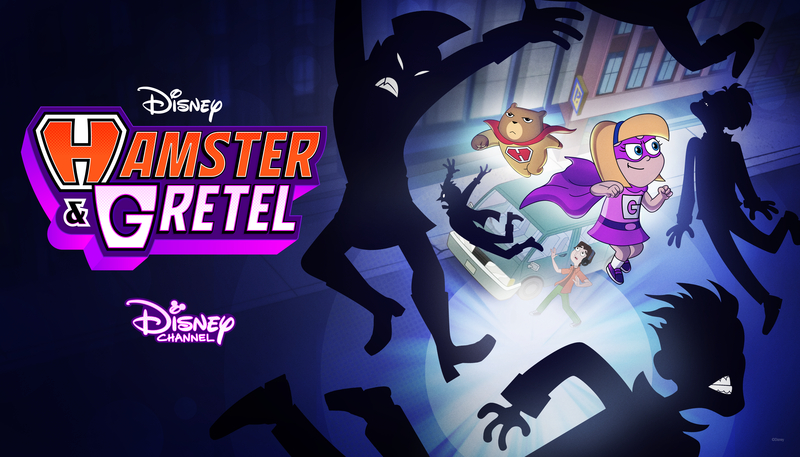
Hamster & Gretel (New Series) - February 13th
When Gretel and her pet hamster -- named Hamster -- get superpowers, older brother Kevin must work with them to figure out how to protect their city from mysterious dangers.

Mickey Mouse Funhouse (New Episodes) - February 6th
Mickey, Minnie and Funny go on an adventure to the Kingdom of Majestica, where they find out if dragons are friendly beings or not.

Eureka (Girls In Science) - February 11th
It follows a talented young inventor from a fantastical prehistoric world who uses her creative thinking to devise inventions and contraptions aimed at making the world a better place.

Regular Nick:
The Twisted Timeline Of Sammy And Raj to rollout on Nicktoons in Africa
Moonbug Kids To Distribute New STEAM Focused Series, Ocean Explorers
New Bear Grylls series is coming soon to Da Vinci Kids

Zeynep and Mehdi are back for drama on eExtra

Verdeelde Liefde follows the life of Zeynep a young woman whose mother gave her up for adoption in order to have a better life following her brother's death. By fate, she meets Mehdi who at one point from monster become the love of life.

The first season stars Demet Özdemir, Zuhal Gencer, Senan Kara, Fatih Koyunoglu, Elif Sönmez, Hülya Duyar, Naz Göktan, Incinur Dasdemir and Ibrahim Celikkol.

Season 1 is set to reach its climax by the end of the month with season 2 following immediately after the first season.

In season 2, Özlem accuses Sultan of stealing the money in Baris's room. Savas admits he took the money. Ali Riza gathers his family and goes to Sultan's house to apologize. Sultan accepts getting back to work.

Openview Plus:
- Imbewu has been cancelled on e.tv after 5 seasons
Reviewing major changes coming soon to the SABC
A look at former NBC soap, Passions

Farewell to password sharing on Netflix

The time Netflix 'freeloaders' have long feared will soon arrive - password sharing will be banned by the end of March.

The company shared the news in a letter to shareholders, noting that 'widespread account sharing' has exceeded over 100 million viewers.

These individuals, however, will be able to transfer their profiles to a new paid account, allowing them to carry over their preferences.

Netflix said 2022 had been a 'tough year' due to its first subscriber loss in more than a decade - its customer base fell by 200,000 subscribers in the first quarter.

'Today's widespread account sharing undermines our long-term ability to invest in and improve Netflix, as well as build our business.' the company said in its letter.

'While our terms of use limit use of Netflix to a household, we recognize this is a change for members who share their account more broadly.'

YouTube Premium:
- Zoey 102 feature film is coming to Paramount+
- Dungeons And Dragons TV series is coming to Paramount+
- How to view the latest content on PBS Kids?

Afrikaans Voice Actors For Die Vertroueling, Soete Wraak And Chrysalis

Also Read

All the credit goes out to Die Afrikaans Voices actors.pagie

Die Vertroueling

Keenan Herman as Marasli
Margo Kotze as Alina Boz Mahur
Johann Vermaak as Saygin Soysal Savas
Keeno-Lee Hector as Serhat Kilic Necati
Chris Van Rensburg as Cemil Büyukoogerli Ilhan
Charlene La Roux as Melis Isiten Dilsad
Andahr Cotton as Cihan Yenici Ozan
Thomas Van Niekerk as Kerem Atabeyoglu Aziz

Soete Wraak

Cintaine Schutte as Pelin
Johann Vermaak as Sinan/Tankut
Albert Maritz as Riza
Amor Tredoux as Süheyla
Wynand Ferreira as Tolga
Tanja Franzsen as Basak
Antonette Louw as Simay
Daneel Van Der Walt as Ceyda
Hendrik Nieuwoudt as Bülent
Lee Roodt as Necip
Frieda Van Den Heever as Havva

Chrysalis

Roeline Daneel as Nalan
Chris Van Nieken as Rafet
Rushney Ferguson as Dondu
Leatitia Solomons as Gulcihan
Maria De Valente as Billur
Marcel Van Heerden as Adil Ipekoglu
Stiaan Bruwer as Tako
Antoinette Kellerman as Feride Ipekoglu
Amalia Uys as Cana

Genius Brands Expands International Market Launches For Kartoon Channel! Worldwide

Also Read

Continuing to build the global footprint of Kartoon Channel! Worldwide, Genius Brands International, Inc. has signed a deal with China’s StarTimes to launch the rapidly growing Kartoon Channel! on January 31st on DTH satellite and digital terrestrial in South Africa and in 46 countries throughout the Sub-Saharan African region.

The brand new 24/7 Kartoon Channel!, dedicated to Africa, will be available to all StarTimes customers in the basic tier on DTH satellite and digital terrestrial: channel 304 on satellite and channel 357 on DTT (276 in Uganda). Kartoon Channel! Africa will offer exclusive and first run series that have proven popular with kids and families, including Genius Brands’ originals “Stan Lee’s Superhero Kindergarten,” starring Arnold Schwarzenegger, “Rainbow Rangers,” “Thomas Edison’s Secret Lab,” and “Llama Llama,” starring Jennifer Garner and based on the bestselling children’s book franchise. The channel will also feature family-friendly movies on the weekends such as “Stan Lee’s Mighty 7,” “Ella Bella Bingo,” “Toys and Pets,” and “Boonie Bears.”

Insidus Games:
Powerpuff Girls Snowboarding
Baby Felix Halloween
Looney Tunes Monster Match
Thor: The Dark World

Additionally, Kartoon Channel! Africa will internationally premier the recently announced new 10-episode elimination-style competition reality series and accompanying Roblox Game Experiences for children, Kidaverse Roblox* Rumble. Hosted by TV personality and former NFL star, Rashad Jennings, the series will air as part of a games-branded programming block on weekday afternoons.

“We continue to build the global presence of Kartoon Channel! by creating unique partnerships, and we are delighted and honored to work with StarTimes to bring Kartoon Channel! to African kids and families in 2023. Our family-friendly brand values and safe environment deliver the perfect recipe to entertain and inform kids via characters and shows they adore. We are just getting started in growing Kartoon Channel! as a preeminent children’s entertainment destination worldwide,” stated President of Kartoon Channel! Worldwide Paul Robinson.

“We are thrilled to launch a channel throughout Africa that offers such a diverse line-up of programming for children 2 – 12-years-old and their families.  With safe, value-driven content across multiple genres, we anticipate Kartoon Channel! to be a hit across the region, and look forward to working with Genius Brands in the coming years to bring a unique entertainment experience to our young audiences across the region,” said General Manager of StarTimes Media Lily Meng.

Kartoon Channel! is currently available in key territories around the world, including Australia and New Zealand (Samsung TV Plus), Germany (Waipu), and the Philippines (Tapp Digital). Kartoon Channel! branded blocks are also currently available in 65 countries across the Middle East, Africa, and Latin America.

Regular Nick:
Could Universal Kids be the next channel to close down from NBCUniversal?
Here are other ways to view PBS Kids
The Twisted Timeline Of Sammy And Raj coming soon to Nickelodeon
Predictions: Nicktoons and Boomerang's untimely demise

PBS KIDS Announces New Toons ‘Lyla In The Loop’ & ‘Weather Hunters’

Also Read

At the Television Critics Association Press Tour, PBS KIDS announced the production of two new engaging and educational animated series: Lyla in the Loop, a comedy introducing youngsters to computational thinking concepts, and STEM series Weather Hunters, starring Al Roker.

“Lyla in the Loop focuses on the important skills of creative thinking and problem solving through a thoughtful and adventurous approach that meets children in a funny and relatable way,” said Sara DeWitt, Senior Vice President and General Manager, PBS KIDS. “We’re so excited to be partnering with Mighty Picnic and Pipeline Studios to bring this inventive new series to families across the country.”

DeWitt added, “We’re so excited to be working with Al Roker and his team to bring important weather and Earth science lessons to kids through Weather Hunters. We know that parents and kids are looking for content about weather and climate; this show is fresh, funny and forward-thinking, and will help kids understand how weather affects their lives every day.”

Insidus Games:
- Fix It Fun! Bob The Builder
- Blue's Alphabet Book
- Buzz Lightyear Star Command
- Bugs Bunny & Lola Bunny: Operation Carrot Patch

Lyla in the Loop
Aimed at kids 4-8,  Lyla in the Loop is created by Emmy-winning producer Dave Peth (Odd Squad, Peg + Cat, Scribbles and Ink, Design Squad), founder of media production and consulting company Mighty Picnic. Pipeline Studios, the Emmy-winning children’s content studio (Elinor Wonders Why, Alma’s Way, Bubble Guppies) is animating the series. Funding was provided by a grant from the Corporation for Public Broadcasting and a grant from the U.S. Department of Education as part of the Ready to Learn Initiative. The series will be complemented by digital content for kids, families and teachers.

“The message of Lyla in the Loopis that everyone has what it takes to be a creative problem-solver,” says Peth. “If you keep asking questions, trying new things, and working together, you’ll find more solutions than you could have imagined – and have a lot of fun along the way.”

Series executive producer & head writer Fracaswell Hyman adds: “In a world where representation matters, Lyla in the Loop features a Black girl who feels there is no problem too big or too small to solve. Lyla leans in when problems occur or obstacles appear. She is curious, imaginative and although she sometimes dives in head first without looking, her tenacity and creativity when it comes to problem-solving makes it clear that she will eventually resurface triumphant. Lyla’s loving family, friends and fantastical companion, Stu, create a warm environment that will attract viewers and invite them to emulate Lyla when challenges come their way.”

Synopsis: Lyla in the Loop centers on Lyla’s family and diverse community. In addition to Lyla, the show features her mom, dad, 5-year-old brother Luke, 12-year-old twin sisters Liana and Louisa, and best friend Everett Phan, who all live in an apartment building and neighborhood bustling with activity. Stu, a fuzzy blue creature with a big smile helps Lyla tackle all kinds of challenges — like building the best-ever train set for her brother Luke, creating an extra-special sandwich for her family’s restaurant, Loops Lunch, and searching for a missing package sent by an Auntie in Jamaica (with delicious spice buns and other traditional treats inside!).

In every adventure, Lyla and Stu introduce and explore foundational computational thinking concepts, leading to some comedic disasters and creative solutions, all while helping others in their community. The series will support a wide range of learners, modeling flexible approaches to finding and designing solutions, and creative self-expression.

“Lyla is a character I would’ve loved to see on television when I was seven,” says series story editor Monique D. Hall. “She’s a little Black girl who isn’t afraid to be her full, smart, and silly self. She and Stu get into all kinds of fun messes, but they always manage to find clever ways out of them — even if it takes a few tries. You’ll definitely want to be in the loop for whatever adventure Lyla, Stu and the rest of the Loops Crew get into next!”

Series advisors for Lyla in the Loop include Dr. Amon Millner, Assistant Professor of Computing and Innovation at the Olin College of Engineering directing the Extending Access to STEM Empowerment (EASE) Lab, series Curriculum Director; Nermeen Dashoush, PhD and Clinical Assistant Professor, Early Childhood Education, Boston University, Lead Advisor; Yenda Prado, PhD, Education Researcher at University of California, Irvine, Universal Design for Learning (UDL) advisor; V. Scott Solberg, Professor, Department of Counseling and Applied Human Development, Boston University, Career Pathways and World of Work Advisor; Cosette Strong, Strong Consulting Group, DEIA Advisor.

Weather Hunters
Weather Hunters is a new animated science series for kids ages 5-8 from Al Roker Entertainment (ARE), the production company led by beloved Emmy-winning TODAY weatherman and host, Al Roker. The series is designed to support kids’ understanding of PBS KIDS Announces New Toons ‘Lyla in the Loop’ & ‘Weather Hunters’ through adventure and comedy as it follows eight-year-old Lily Hunter, a weather detective who shares her investigations with her family — including dad Al Hunter, voiced by Roker.

“Weather Hunters has been a labor of love and a passion project for more than a decade and I cannot think of a better partner than PBS KIDS to make this dream come true,” says Roker. “When it comes to Weather Hunters , I predict increasing animation with downpours of family friendly storytelling and a rising understanding of weather and climate on your local PBS station, pbskids.org, and the PBS KIDS Video and Games apps.”

Each 22-minute episode of Weather Hunters will explore kid-relatable STEM-based activities and themes, highlighting the wonder of weather within the broad field of science in terms that all learners can understand. Topics include observing and tracking weather patterns, exploring why weather changes can be different around the country and the world, and the connection between humans and the environment. The series will reinforce key weather, climate, and environmental concepts to provide building blocks for further learning. Digital content for kids, parents and teachers will launch along with the series to reinforce the show’s key messages and encourage further engagement.

Regular Nick:
- Phineas And Ferb to get 40 additional new episodes on Disney Channel
- Iwayu set to debut on Cartoon Network by 2024
- Could Universal Kids be the next channel to close down from NBCUniversal?
The Twisted Timeline Of Sammy And Raj coming soon to Nickelodeon

Created by Roker, Weather Hunters  is being produced by New York-based Al Roker Entertainment. Tracie Brennan and Lisa Tucker (ARE) serve as executive producers, along with four-time Emmy Award-winning animation industry veteran, Bill Schultz (The Simpsons, Garfield, Clifford the Big Red Dog). The original series brings together an amazing team of artists and writers for the new 40 half-hour series, including notable animation director Tyree Dilihay (Bob’s Burgers), animation producer/director Jerry Brice, head writer John Semper (Static Shock, Fraggle Rock) and three-time Emmy winner and writer, Carin Greenberg (Tumbleleaf). The production is made possible with funding from Margaret A. Cargill Philanthropies and PBS.

BBC To Close Linear Channels And Move Into An Internet-Only Digital Future

Also Read

The BBC is to have “fewer linear broadcast services” in the next decade as it “consolidates activity under one simple, single brand,” Director General Tim Davie has revealed, as he unveiled a blueprint for a digitally-led Public Service Broadcaster.

Davie didn’t elaborate during an RTS talk this morning but Deadline understands it could be several years until the move is enacted. The speech signalled the start of a shift to taking linear-channels online only that will start over the next decade, as Davie prepares for a digital future.

“The BBC will focus its effort on the digital world and over time this will mean fewer linear broadcast services and a more tailored joined up online offer,” said the DG. He stressed “live linear is here for the long term.”

Some of this has already started happening, added Davie, who pointed to the controversial move to combine the BBC News Channel with BBC World News. BBC Four, meanwhile, still exists but has stopped commissioning original programing. To many people’s surprise, youth-skewing BBC Three went in the opposite direction, relaunching as a linear channel earlier this year.

BBC:
- eAfrica Vs. BBC UKTV: Another Attempt To Auction Off Second Hand Goods
- BBC UKTV Vs. ITV Choice: Another Attempt At Boosting The BBC On DStv
- Acorn TV Closing Down By The End Of The Year In South Africa, Still No Clue If AMC+ Will Launch In The Market
- MultiChoice: "Why Premium Customers Might Lose Out On A Certain New Channel?"

Another way in which the BBC could “unite under a single brand” would be through combining iPlayer with Sport and podcast apps, for example, with more information on this activity due in the new year.

Davie, who has been in post two years now, stressed the need for more investment to lead the BBC into an internet-only digital future.

“Inevitably all this requires another choice and that is to actively, dare I say happily, invest in the BBC,” he added, in the speech to grandees, journalists and commentators in Central London. “Moving to digital is not the challenge in of itself, moving to digital while not losing most of your audience and burning millions of pounds unnecessarily is the challenge.”

His talk came a day after UK Culture Secretary Michelle Donelan said it is “impossible” for the license fee to remain the BBC’s funding model after 2027 and a review is currently taking place into the corporation’s future funding.

Beyond the increase of commercial outfit BBC Studios’ debt limit, more partnerships and loosened regulation, Davie struggled to put his finger on how the BBC will be able to attract the necessary capital for the transformation.

He said the BBC’s current £5.3B ($6.4B) annual income can just about keep the corporation afloat with prices soaring and the license fee frozen for the next two years.

“The bigger conversation here is whether we are OK to get into the 2030s to protect PSB,” he added. “If you look across the world, [media companies] are struggling to raise revenue. There will be a massive strain but we believe we can maintain universality and scale in UK.”

His blueprint for a thriving digitally-led PSB is four-pronged: “owning a move to an internet-only future with greater urgency,” “transforming the BBC faster,” “proactively investing in the BBC brand” and “moving faster to regulate for future success.”

By this method, Davie said the pubcaster will avoid “simply drifting to the point where the emergence of vast U.S. and Chinese players marginalize us while we put on a very British brave face as they do so.”

Part of the push involves owning more IP, an area that Davie stressed is far more important than having studio space.

“We need to own IP and find the writers who own them,” he declared. “This is a bigger question than who is operating the most effective shed [studio space]. Those sheds are brilliant at skills and apprenticeships but they are not going to underpin the future – that’s about IP and ownership.”

DStv:
- kykNET Lekker Opened To More DStv Customers For A Limited Time
- What Consumers Should Be Concerned About Regarding SABC's Yet To Be Launched Channels On DStv?
- Press Release: DStv Welcomes The Launch Of Quincy Jones’ QWEST TV Onto Screens This Month
- New Channel Alert: WildEarth To Launch In The UK Later In The Year

Speech: Leading The UK Into Digital By The Director-General Of The BBC, Tim Davie, At The Royal Television Society

Also Read

Good morning. Today, 100 years and 23 days after the first BBC broadcast, I want to talk about choices. Choices for us all.

Choices that have profound consequences for our society; its economic success, its cultural life, its democratic health. Our UK and its essence. Of what we hand to the next generation. Of growth.

Choices that concern not just the role of the BBC, but something bigger. About whether we want to leave a legacy of a thriving, world leading UK media market or accept, on our watch, a slow decline. 

Are we simply going to drift to the point where the emergence of vast US and Chinese players marginalise us, while we put on a very British brave face as they do so? Resigned to the fact that our culture and creative economy will inevitably be shaped by polarised platforms and overseas content. Or are we proactively going to take the steps to ensure that we tell our own stories, and remain the envy of the world?

Today I want make a simple case.  A case for growth, and the choices, as the UK, to own it.   

Too much of this debate is painfully “small”. In BBC terms, we understandably fret about domestic issues, political spats and latest headlines. And, because people care, we keep busy on a joyous treadmill of flare-ups and debates.  

One of my favourite quotes of Lord Reith is “the BBC will never broadcast anything controversial, and has no plans to do so.” If only.

But beyond the day-to-day, we urgently need to spend more time agreeing what we want to create that best serves our audiences, the economy and society.

Today I want to set out some of the choices that we need to make, and make the case for ambition.  

This will require the BBC, regulators, politicians – all of us - to work together and make clear decisions. To invest capital and set policy, deliberately, not simply live on hope and good intent.  To create a bigger creative sector supported by strong public service media and a thriving BBC. 

In short, we have reached a defining decade for the future of this incredible sector and this wonderful country.   

But first, a quick look back. This year has shone a light on a venture, a 100 years old, that has delivered outstanding shareholder returns: the BBC.  It has not come about accidentally. It is a triumph of smart invention and intervention. An inspired choice by those early pioneers as they reflected on what really mattered in life after the scars of war. They decided, amazingly, that broadcasting was not simply about money, it was  more important than that.  

It has led to immense returns to the UK public: economic growth, societal growth, personal growth. Value for all.   

It’s easy to forget what a remarkable story of success it is. And how much of it we take as given. Of course, the BBC is not perfect, we make mistakes, we struggle, we commit acts of self-harm, and our funding mechanic, the Licence Fee, is positively described by some as the least worst option. But step back a bit from the noise and look at our legacy.

There’s the creative health of the nation.

Ever since those early days in 1922 when 2LO crackled into life, we have backed our culture, through an enlightened blend of smart public interventions, brilliant commercial companies, and inspirational individuals.

At the heart of that ecosystem is the BBC. 

Critically, our universal brief means we do not simply look to maximise global efficiency and monetise a core audience. We support creativity in every part of the UK and its Nations. Our work helps us understand each other and find communal stories that underpin our national life.

9 in 10 people say it’s important for our media to reflect the lives of different people in the UK to each other. 

Then there’s our creative industries, a world leading economic powerhouse. 

£109bn in annual GVA – that’s bigger than the life sciences, aerospace, automotive, oil and gas sectors combined.

If we get it right, we have the potential to more than double that by 2030 growing way ahead of the wider economy, and delivering jobs across the UK.

The BBC as a catalyst for growth is proven. 

We support over 50,000 jobs – more than half outside London. We work with 14,000 suppliers.  

In Salford, the number of creative businesses has grown by 70% since we moved there in 2010.  In Cardiff, the creative sector has grown by over 50% since we opened Roath Lock Studios in 2011. 

New analysis from PwC shows that increasing the BBC’s footprint in an area by just 15%, doubles the creative cluster growth rate.  By 2028, the BBC’s ‘Across the UK’ plans can create more than 4,500 new creative businesses outside London, along with 45,000 jobs. 

But the BBC’s legacy is also about our democracy.

We face a growing assault on truth and free reporting. Recent data on our watch is stark and shocking.

In February, Freedom House in the US found that 60 countries suffered democratic decline in 2021, while only 25 improved. 

Only around 20% of people now live in what are considered free countries – that’s halved in 10 years. Journalism is now completely or partly blocked in 73% of countries.

The social psychologist Jonathan Haidt argues there are three forces that bind successful democracies: social capital; strong institutions; and shared stories.  Not a bad list if you are in my job.

But he also believes that social media, while having many benefits, has weakened all three. It weakens political systems which are based on compromise and it fuels mob dynamics that restrict a constructive process of dissent and debate.

Our own research shows that’s happening here, too. Over 40% of people are now worried about sharing views with those who have a different view.

Research by the European Broadcasting Union shows that well-funded public service broadcasters goes hand-in-hand with democratic health. The greater their audience, the more citizens tend to trust each other.

That is why the UK’s strong global voice is so precious. 

Today the BBC reaches nearly half a billion people weekly, a number that has been growing. We are the best known British cultural export – quite something when you consider the competition, from music to monarchy.

In India, our services reach 70 million people in 9 local languages. In the US, the BBC is now the most trusted news brand.

When our Russia Editor, Steve Rosenberg, interviewed Foreign Minister Lavrov, a must watch by the way, it got over 7 million views inside Russia.

So I think that if Reith were sitting here today, apart from giving me that withering stare, I think he would be amazed by what we have created, together.  

These successes are the result of deliberate decision-making and difficult choices. 

There was the birth of TV in the 30s, and the reshaping of radio in the 60s – when we said goodbye to the Home Service, the Light Programme, and the Third Programme.

The launch of BBC Online in the 90s. The launch of iPlayer in 2007 – a moment that, in the words of Reed Hastings, “blazed the trail” for global streamers.

Alongside these BBC moves, we have acted successfully as an industry. Freeview, Freesat, digital TV switchover, DAB, Radioplayer, Youview, all successful in developing our media sector, fostering competition but also enhancing public service broadcasting.

All these moments required a choice, a will, an optimism, and a generosity of vision. A desire to see the big picture.  

There are cautionary tales too. The infamous blocking of Project Kangaroo back in 2009, when the UK PSBs wanted to set up a streaming service.  

But, overall, there is so much to be proud of in what we have created together.  

However, today, I believe we are in a period of real jeopardy. A life-threatening challenge to our local media, and the cultural and the social benefit they provide. This is not an immediate crisis for audiences.  The choice of high-quality TV and audio has never been better. The threat is not about if there is choice, it is about the scope of future choice and what factors shape it.  

Do we want a US-style media market or do we want to fight to grow something different based on our vision? 

I sometimes read that the BBC needs to clock that the world has changed. I can assure you that we do not need convincing.  

The internet has stripped away the historical distribution advantage of having half of the TV channels or FM frequencies. In this world relevance, like trust, has to be earned.  

Industry analysts predict that we have probably seen the last year in the UK when broadcasters make up the majority of video viewing. Five years ago broadcast TV reached nearly 80% of young adults a week. Today it’s around 50%, and radical changes are happening across all ages. Tik Tok is now bigger than the BBC in video for 16-24s in the UK.

So today is the right time to ask the question, are we happy to let the global market simply take its course or are we going to intervene to shape the UK market?

Now, before looking to the future, let me just give a quick update on how the BBC is doing. 

We have been working on transformation rather than just managing decline. Despite market changes and cuts, we have coped well by focusing entirely on providing value to all. Not simply saying we are a good thing but being used.  

Our Value For All strategy is clear: ensuring we are impartial, delivering must-watch UK content and developing a world-class online offer. Supported by ambitious commercial plans. 

Nearly 90% of adults, and 75% of 16-34s came to the BBC every week, and every month nearly every adult uses us in the UK. These reach numbers have held up well. Over 30 million browses in the UK used the BBC online yesterday, the only online UK brand to really mix it with global players.  

When it comes to hours of video watched in the UK, the BBC remains bigger than Netflix, Amazon Prime and Disney Plus, combined. 

Editorially we have wind in our sails.  Award-winning shows from Time to Motherland.  9 million watched the launch of Frozen Planet II, a peak audience of 17 million watching the Women’s Euros final, 42 million streams of Glastonbury.  And the coverage of the Queen’s funeral showed what only the BBC can do.

More recently, in its first seven days since launch, episode one of SAS Rogue Heroes had an audience of 6.5 million, compared with 3 million for episode one of the latest season of The Crown.  

We’ve grown BBC Sounds to over 1.5 billion listens. 

And, in the midst of culture war storms and Twitter rage, the numbers of people saying we offer impartial news has held firm.

Commercially, BBC Studios has grown rapidly in the last 5 years delivering a stretching target of over £1.2bn in returns and growing profits 70%.

We also drove the UK economy. Our Across the UK plans are well underway and mean we’re on target for £700m of additional spend outside London by 2027/28.  For example, we’ve announced £25m investment in the North East, a new Birmingham base in Digbeth, and we’ve moved news teams. We relocated 8 Radio 3 titles yesterday in Salford. And we continue to invest in unique and strong content in the Nations and Regions. 

At the same time we’ve stepped up our commitment to a highly efficient BBC, fit to deliver maximum possible value. We’ve reduced our overhead rate to within 5% of our total costs. We cut over 1,000 public service roles last year.  All our senior managers are assessed and we are stripping away bureaucracy as we create a world-class culture.

Overall our progress over the last 2 years has been good. In many ways, thanks to the exceptional talent in the BBC, it has been gravity defying. But looking to 2030, it is not enough.

So now let’s look to that future. Imagine a world that is internet only, where broadcast TV and radio are being switched off and choice is infinite. There’s still a lot of live linear viewing but it is all been delivered online. 

Far from decline, could we harness the possibilities of this interactive digital landscape to increase public value and stimulate the UK media market? What would it actually take to deliver that? 

I think there are four choices that we need to make to give us a real chance of achieving success for the UK. They need urgent action. Namely: 

- Should we, as the UK, own a move to an internet future with greater urgency?
- Should we transform the BBC faster to have a clear, market leading role in the digital age?
- Should we proactively invest in the BBC brand as a global leader? 
- Should  we move faster in regulating for future success? 

Of course the answer to these choices is yes. 

I don’t intend to answer every question in detail today but let me outline some thoughts.

Firstly, we must work together to ensure that everyone is connected, and can get their TV and radio via the internet. This isn’t something to resist. A fully connected UK has very significant benefits for society and our economy. It would unleash huge opportunities for innovation.

For the BBC, internet-only distribution is an opportunity to connect more deeply with our audiences and to provide them with better services and choice than broadcast allows. It provides a significant editorial opportunities. A switch off of broadcast will and should happen over time, and we should be active in planning for it. 

Of course, there’s a bad way it could happen. Where access to content is no longer universal. Or is unaffordable for too many. Where the gateway to content is owned by well capitalised overseas companies. 

So, we must close gaps and guarantee accessibility for all. Forecasts suggest that by 2030, about 2million homes will still not be using fixed-line broadband and even in a few years 5% of the UK landmass may not be covered by 5G or 4G to provide content on the move.  Now I know that there is a renewed effort to drive this coverage by Government and the DCMS; this is critical.

While the BBC cannot fund the build-out it can collaborate with others to make a move to online attractive to all, and play a big part in educating people about  the transition. We will become more active as part of a coalition to make this happen. 

Let’s all work to plan it flawlessly and leave no-one behind, and ensure that UK businesses and audiences get maximum benefit.

In this new world, the next choice we need make is to champion a clear, market leading role for the BBC. How will we inform, educate and entertain in 2030?

The answer must be to differentiate and not copy.  

The BBC will focus its effort on the following in the digital world:

- Nurturing an informed society through impartial, trusted news and information
- Inspiring and supporting people of all ages with trusted knowledge and training
- Engaging audiences with high-quality local British creativity from across the UK

Over time this will mean fewer linear broadcast services and a more tailored joined up online offer. As examples, we will double down on the latest work in News on disinformation, or accelerate the drive to ensure that Network drama is sourced from across the UK which differentiates us from others.

We believe that if we drive this transition successfully we can deliver universality despite a world of intense competition. We will achieve this not by creating derivative or niche content but ensuring maximum relevance of our core output.  To be clear, by universality we mean three things, which global players do not do. Namely:

- Access: making sure all audiences in the UK can get to the BBC
- Relevance: making content that aims to appeal to all UK audiences not just monetizable groups
- Engagement: reaching and being used by the vast majority of UK audiences

In the future we will need to transform the BBC faster to deliver a compelling online offer.

We are working on how an IP BBC could be the best version of the BBC shaped around people’s interests and needs. A daily partner to your life, bringing the BBC together in a single offer with personalised combinations.  A world in which local news, areas of interest and hidden gems can be found more easily.  

Digital offers a huge opportunity to unlock more audience value but it requires big organisational change: a radical overhaul of how we use data, a heavyweight world-class tech team, new operating models, new creative solutions and ideas. Imagine news re-imagined for the iPlayer or increased functionality when watching the game online. 

We will be world-leading pioneers in this. No-one in the world has created a digitally led public service media company of scale and the global opportunity for us is there for the taking. 

Within the BBC this means significant change. We will have fewer brands overall, and consolidate more activity behind a simple, single brand in the UK: the BBC. And you’ll see this globally as well. We will also simplify sub-brands such as BBC News. You can see a first step in our bringing together of the BBC News Channel and BBC World News as one brand: BBC News. 

We will share more plans in this area in the coming months. 

Inevitably all this requires another choice and that is to actively, dare I say happily, invest in the BBC. 

Any transition of a legacy, broadcast organisation to a digital future needs capital. As the owner of even the biggest companies are finding out, it is not for the faint hearted. Moving to digital is not the challenge in of itself, moving to digital while not losing most of your audience and burning millions of pounds unnecessarily is the challenge.   

In the BBC we are privileged to have the Licence Fee until 27/28 but if you take the period 2010 to 2028, we forecast that core funding for the BBC  has been cut by a whopping 30%. Now my key metric is providing great audience value for that fee. But others have been driving up pricing and driving up media costs reducing the BBC’s ability to deliver great value. As we look to the 2030s, we are open minded about future funding mechanics. But we are clear that it is critical that we need a universal solution that fuels UK public service growth not stifles it while offering  audiences outstanding value for money.

Of course, the latest settlement did include the increased debt facility for BBC Studios which was welcome, and we are ambitious about its prospects. Alongside commercial plans, we will keep cutting costs to invest and attract more partner investment as well such as the latest deal we announced with Disney on Doctor Who.  But under the most ambitious scenarios, this will not change the need for serious public service investment.

And in the short term we will need more money to support the World Service to avoid further cuts and we will be discussing this with the FCDO. The Russians and Chinese are investing hundreds of millions in state backed services. We have a choice to make.

We will of course complement this world service growth with ambitious plans for BBC Studios.

The BBC is one of the most powerful and well recognised brands on the planet and we should be backing it. It’s as simple as that.

Lastly, we need to regulate for success at speed.

This is not a new theme. It’s no secret to anyone here that our legal and regulatory environment has not kept pace with the market. 

The Digital Markets Act, Online Safety Bill, the Data and Digital Identity Bill, and the Media Bill planned for this Parliament are essential. We need rules for the prominence, availability and inclusion of PSB content in new platforms, in video and audio. Organisations providing content need the detailed data that will be the lifeblood of success in the new world.  

But it cannot be right that we have to wait years for legislation to recognise change in our sector.  

So we need a regulatory framework that is proactive. It must be agile – able to respond without endless consultation and process. I am pleased that Ofcom is working in this area.  

Part of this is allowing the commercial arm to thrive and a regime that is ex post, not ex ante, responding to obvious harm when it occurs, not defining every possible negative outcome in advance and restricting UK innovation as a result.

So, in summary, four choices for our future. 

Move to an internet future with greater urgency

- Transform the BBC faster to have a clear, market leading role in the digital age
- Proactively invest in the BBC brand as a global leader
- Move faster in regulating for future success urgently
- Shaping the online future of the UK to work for all of us. To lead not to follow.  To grow.

Thank you.

Roundups #131: Phineas And Ferb Gets A Two Season Order On Disney Channel And Disney+, 3AM: The Driver Coming Soon To KIX And Decisions Makes A Comeback On Telemundo Africa Ahead Of Nurses S3

Also Read

40 additional episodes of Phineas And Ferb had been ordered on Disney Channel and Disney+

Disney Branded Television has announced that it has signed a brand new overall deal with Dan Povenmire, who is the co-creator and executive producer of the global super-hit “Phineas and Ferb,” which includes production of 40 all-new episodes of “Phineas and Ferb,” a second season renewal of the animated superhero series “Hamster & Gretel” and the development of live-action projects.

“Phineas and Ferb” is a five-time Emmy Award-winner and the most successful animated series for Kids 6-11 and Tweens 9-14 in Disney Television Animation history. Since its premiere, “Hamster & Gretel” ties as the #1 cable series among Kids age 6-11 delivery.

The announcement was made during a presentation at the Television Critics Association press tour by Ayo Davis, president, Disney Branded Television, who said in a statement:

“Dan is renowned for his ability to create universally beloved stories and characters with both heart and humor. We couldn’t be happier to continue our collaboration with him and bring back the iconic ‘Phineas and Ferb’ in a big way.”

Regular Nick:
- Could Universal Kids be the next channel to close down from NBCUniversal?
Here are other ways to view PBS Kids
The Twisted Timeline Of Sammy And Raj coming soon to Nickelodeon
Predictions: Nicktoons and Boomerang's untimely demise

Second instalment to 3AM launches on KIX

3AM serves as the channel's first attempt at TV series which was unveiled last year with its first instalment titled The Office. Now the channel will be rolling out the second out of five instalments from the anthology titled The Driver.

A taxi driver who is constantly judging others by his own standards, also reads into their every move and sets out to help 'victims' in his own way. When a woman he likes seems to be bullied by her son, he goes about setting things right for her, even resorting to turning himself into a cold-blooded serial killer.

Produced by Thrill, a general entertainment channel also owned by Celestial Tiger Entertainment. It stars Coby Chong, Thor Yin Wei and Irfani Zhang.

DStv Flex:
- February on The Home Channel
February on HONEY
Reyka renewed for season 2 on M-Net
What to expect this January on Qwest TV?

Telemundo counts down the days to Nurses S3 with Decisions

Earlier in the month, Telemundo welcomed back a fan-favourite Fearless Heart (Corazon Valiente) for the 100th time onto Africa's screens and with Nurses reaching its climax for the second season the channel opts for fan-favourite shows with Decisions.

The anthology tell stories that are affecting ordinary people today. Inspired by high profile research, cases of human identity, social and political struggles, each episode focuses on a transcendental decision that will change the lives of the main characters in a moving, extraordinary and radical way.

It features a variety of cast members including Jorge Luis Pila, Laura Flores, Litzy, Jonathan Islas and Ana María Estupiñán.

Decisions is expected to make a comeback on January 26th with season 3 of Nurses set to air on February 13th.

Everyday Novelas:
- Ramo coming soon to eVOD
Forbidden Passion season 2 not moving forward on Telemundo
Nurses returns for a season 3
The origin story of Forbidden Passion

Roundups #130: Iwayu Created By Set To Debut On Cartoon Network In 2024, Zoey 101 Is Getting A Feature Film On Paramount+ And Conspiracy Theory Surrounding kykNET Lekker's Availability Finally Revealed

Also Read

New Nigerian animated series loading on Cartoon Network

Based on the graphic novel series from writer Roye Okupe and artist Godwin Akpan, HBO Max and Cartoon Network's upcoming Iyanu: Child of Wonder will be heavily influenced by the Yoruba people of Nigeria.

Financed and overseen by Lion Forge Animation, the 2024 animated TV series chronicles the tale of Iyanu, an orphaned teenage girl with no memories of her upbringing who yearns for a simple, normal life. Those dreams get shattered when a set of circumstances triggers Iyanu's dormant divine abilities. Teaming up with two other teenagers, Iyanu embarks on a quest to confront the Corrupt, a great evil rising in their homeland that threatens humanity. Along the way, Iyanu will slowly uncover the truth about her past, parents, powers, and destiny as the Chosen One.

The epic superhero adventure promises to draw from Nigerian culture, music, and lore. In addition, creator Okupe has written and directed multiple episodes. Lion Forge's head of production Saxton Moore, who serves as supervising director, and executive producer David Steward II recently spoke about adapting the graphic novel, cultural representation, Iyanu's quest, and anime influences.

Regular Nick:
- Kartoon Channel expands to Africa
- Could Universal Kids be the next channel to close down from NBCUniversal?
Here are other ways to view PBS Kids
The Twisted Timeline Of Sammy And Raj coming soon to Nickelodeon

Another Nickelodeon revival gets the greenlit for Paramount+

Zoey 101 star Jamie Lynn Spears announced on Instagram a reboot of the Nickelodeon series, titled Zoey 102, is coming to Paramount+.

“IT’S OFFICIAL! 🎬 Are you ready…. @paramountplus @nickelodeon,” Spears wrote in her Instagram caption on Thursday, teasing the show’s iconic theme song, which she sang.

The film was written by Monica Sherer and Madeline Whitby, according to the script shown in the Instagram post. Variety reported on Thursday that production has begun on the movie, and it is expected to be released later this year.

The Instagram post shows a photo featuring the names of some of the original characters, including Chase (Sean Flynn), Logan (Matthew Underwood), Michael (Christopher Massey), Quinn (Erin Sanders), and Stacey (Abby Wilde).

Paramount:
Conspiracy Theory: The introduction to Nick Jr. Global
The Smithsonian Channel is closing down in the UK
VH1 is being redirected to BET
MTV Hits no longer available in South Africa

kykNET Lekker is part of a mysterious open window

In December 2022, MultiChoice opened up kykNET Lekker (DStv 148) which was exclusive to only Access customers to their DStv Premium, Compact+, Compact and Family with not much info available as it occurred prior to the festive holidays.

As school's reopened and consumers reverted back to their daily lives, a source at kykNET was able to confirm that kykNET Lekker is in fact an open window but couldn't provide any more details other than what you already heard.

Basically, the kykNET Lekker's open window is what has been seen from 2022 - a mystery. The channel isn't listed on other packages compared to when channels like Nickelodeon have open windows and them listed on that package and the other having to be the lack of info regarding the channel.

DStv:
MultiChoice might lose yet another two channels
Could Russia Today be removed from the DStv platform?
Qwest TV coming soon to Showmax
eMedia's 4 channels to go dark on the DStv platform